
How to Choose Sticker Labels That Fit Your Product and Budget
To choose sticker labels that fit your product and budget, start with the container surface and how the product will be stored and used. Then make room for the information customers need, compare suitable materials and adhesives, and add finishing only where it serves a purpose. There is no single cheapest label for every product: the best value is a label that performs as required without paying for features the product does not need.
What Does Your Product Need from a Sticker Label?
A sticker label should stay attached and readable from production to customer use. Before choosing a material, check where the label will go and what it will face.
What Surface and Shape Will the Label Go On?
A flat carton, a curved bottle and a squeezable tube give a label different jobs. Curves can lift the edges of a stiff label, while some plastics need a carefully matched adhesive.
Measure the available area on the actual container. For a bendable or tightly curved pack, check a sample in place; a flat artwork proof cannot show whether the label will stay neat.
Will It Face Water, Oil, Cold or Frequent Handling?
A dry carton has different needs from a chilled bottle that collects condensation or a bathroom product handled with wet hands. Oil and repeated rubbing can also affect the printed surface.
Tell the printer where and at what temperature the label is applied, as well as how the product is stored and used. If exposure is uncertain, check a sample on the filled product before ordering.
Will You Apply Labels by Hand or Machine?
Sheets can be convenient for hand application. Rolls may suit an automatic labeller, but must match the machine.
For machine application, provide the machine model or ask the operator for label size, roll core, winding direction and spacing requirements.
What Information Must Fit on the Label?
The label must fit the information your product and sales channel require: product name and variant, plus any net content, instructions, batch or date field, barcode and approved category-specific wording.
Do not shrink text until it is hard to read. A larger label, second panel or layout change may work better. For regulated products, have the responsible team approve the final wording before printing.
If the label needs a barcode, leave enough room for it to scan reliably and test it on the final printed label.
How Do You Choose a Suitable Material Without Overpaying?
Choose the construction for the conditions the product will actually face. Unneeded durability may add cost; a label that peels or becomes unreadable can cause rework. Compare suitable samples on the real pack.
Paper-Based Labels for Dry Packaging
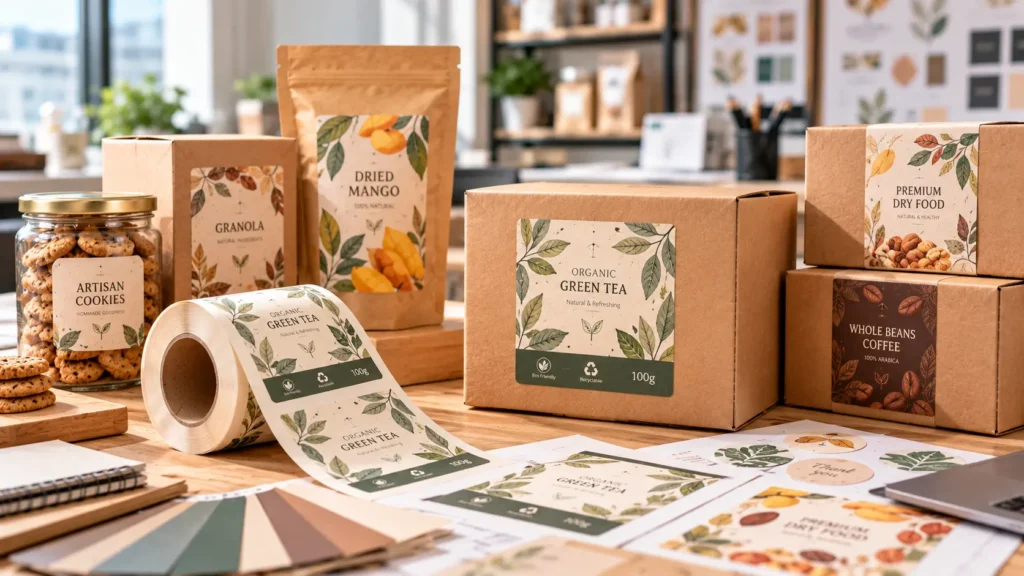
Paper-based labels can suit dry cartons and other packs unlikely to face condensation, oil or wet handling. They offer various printed appearances when storage conditions are straightforward.
If the pack may become damp during storage or delivery, check whether the selected paper and finish still meet the job. Paper is not automatically the lowest-cost finished option once the full specification is quoted.
Film-Based Labels When Greater Durability Is Needed
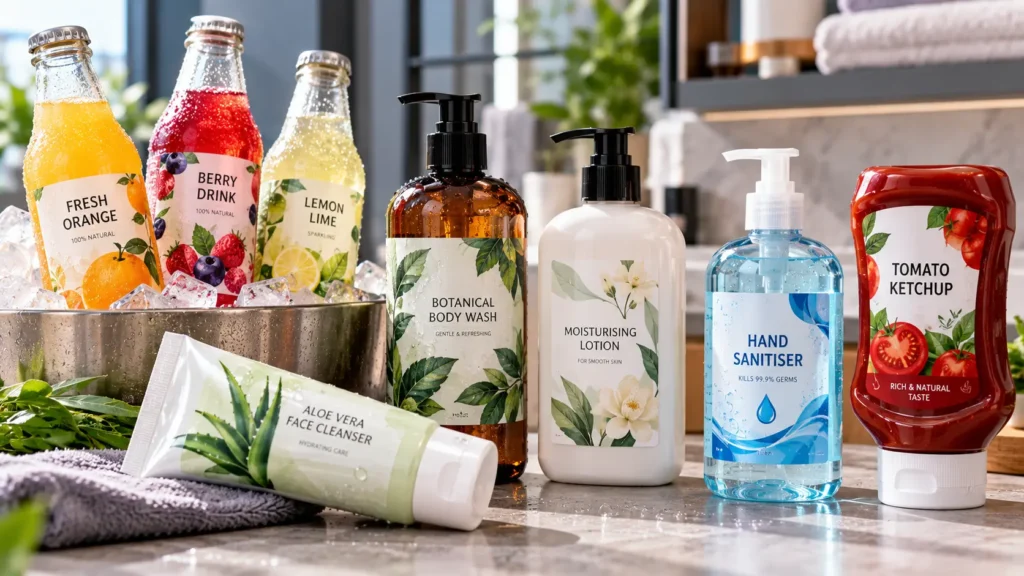
Film-based labels are worth discussing for chilled bottles, bathroom products and frequently handled packs. Some films flex with a squeezable container. Performance still depends on the film, adhesive, print and finish together.
Check a sample on the filled container for edge lifting, scuffing and legibility. For more detail, read the paper-based vs film-based sticker label guide.
What Affects the Cost of Sticker Labels?
Sticker-label costs depend on the full specification, not the material alone. Compare quotations based on the same requirements.
Material and Adhesive
The label material affects appearance and durability, while the adhesive must suit the container and storage conditions. A chilled plastic bottle may need a different label from a dry carton. Describe the surface and how the product will be used so the printer can recommend both.
Label Size, Shape and Quantity
Width, height, cut shape and quantity affect the quotation. If you have several products, state the quantity needed for each design or SKU. Compare options using the same size, material and quantity.
Number of Designs and Finishing
Different flavours or sizes may need separate artwork. Tell the printer how many designs you have, and add protective or decorative finishing only where it serves a purpose. Ask how each choice affects the quotation and production time.
Where Can You Save, and Where Should You Spend More?
Separate essential performance from optional appearance when deciding where to spend:
- Match durability to actual use. A dry, protected pack may not need moisture-resistant material, while a chilled or frequently handled product might.
- Spend on adhesion and readability. Test the label on the real container, especially if it is curved, plastic or chilled, and leave enough room for important information.
- Use finishing selectively. Add protection when handling requires it or a decorative effect when it improves presentation; ask how each affects the quotation.
Compare quotations for the same label size, quantity per design and application format so the cost differences are meaningful.
How Do These Choices Work for Different Products?
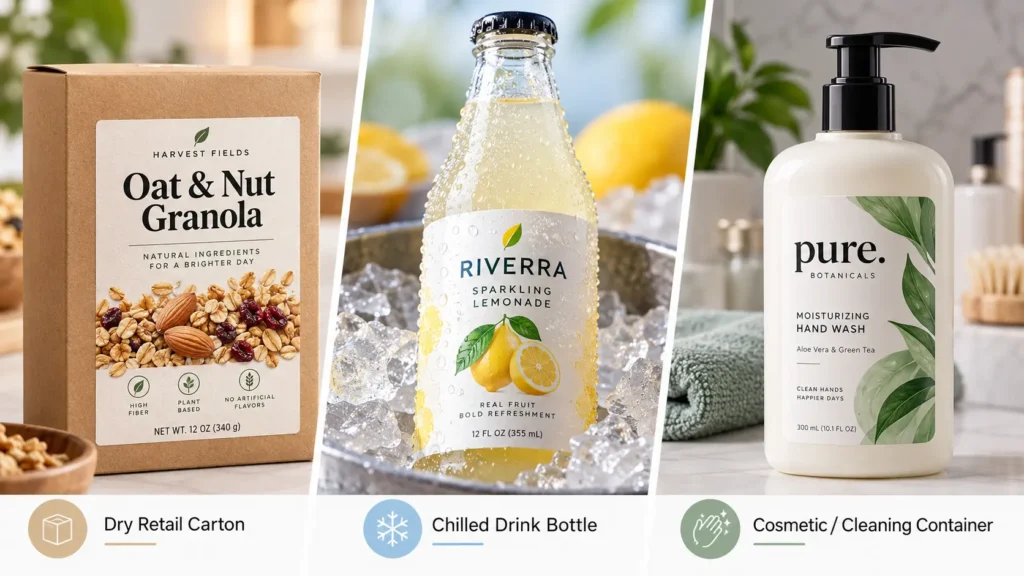
The product itself gives you a starting point. Use the table to decide what to discuss with your printer, then confirm the material and adhesive against a sample or written specification.
| Product Situation | What to Check | What to Consider | What Matters Most |
|---|---|---|---|
| Dry retail carton | Flat surface, storage conditions and amount of information | Can a paper-based label with a suitable finish meet the brief? | Readable product details and reliable adhesion |
| Chilled drink bottle | Curved surface, condensation and temperature during labelling | Which film-and-adhesive combination suits this bottle? | Adhesion and legibility after chilling |
| Cosmetic or cleaning container handled often | Plastic type, water or oil contact and whether the pack bends | Which durable film options work on the filled container? | Resistance during normal use and a neat fit |
A sample should reflect how the product will actually be filled, stored and handled. A label that looks right on an empty, dry pack may behave differently in use.
What Should You Prepare Before Requesting a Quotation?
A useful quotation starts with enough detail to compare suitable options.
Prepare:
- A photo or physical sample of the product container, including its material and shape
- Approximate label width and height, or the area available for a label
- Expected contact with water, oil, cold or frequent handling
- Number of designs and the quantity required for each design
- Whether labels will be applied by hand or machine, and any roll specifications from the operator
- Artwork status, essential information and preferred finish
- Delivery location and the date you need the labels
You may share a target budget range if it helps the discussion. The printer can then suggest a suitable construction, confirm what can be sampled and provide a project-specific price and schedule. If your artwork is still being prepared, the artwork preparation guide can help you check the files before final approval.
Planning custom sticker labels for your product? Contact EAN Label with your container details, label size, quantity per design, artwork status and required delivery date. Our team can provide free consultation and prepare a project-specific quotation that fits your product and budget.
Frequently Asked Questions
Contact Us
Want to know the price or need us to recommend the best solution for you? Just fill in the simple form below and we’ll assist you right away.
Enquiry Form
Request a Quote?
Share your requirements and connect with our expert custom packaging manufacturer. Contact EAN Label today!
Connect with us!


