Stand-Up Pouch vs 3-Side Seal: Which Packaging is Suitable for Your Product?
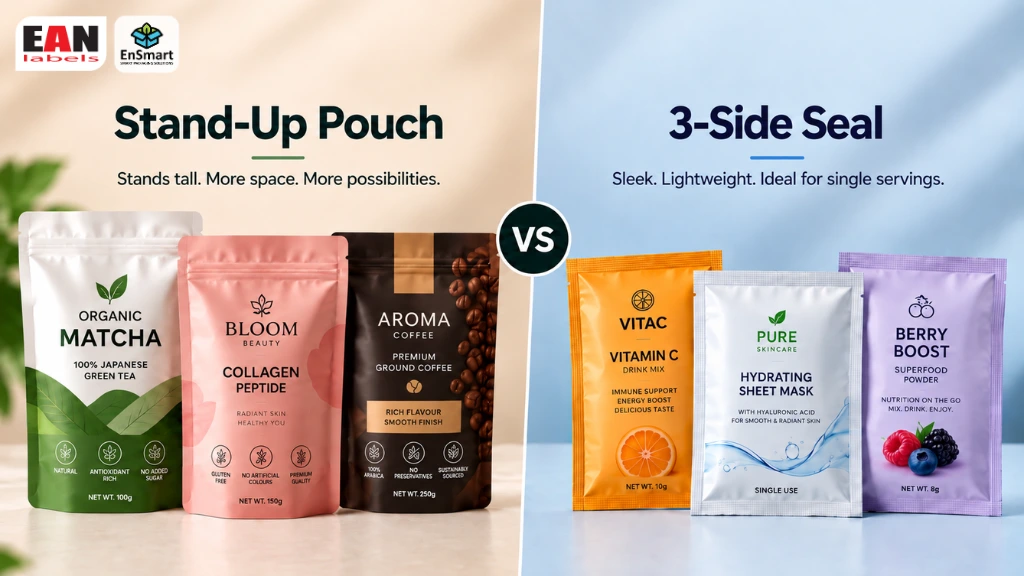
The choice between a stand-up pouch and a 3-side seal depends on the product, fill volume, filling process, display needs and opening method. A 3-side seal is flat with three sealed edges, while stand-up pouch packaging has a bottom gusset that allows the filled pack to stand.
This guide is for Malaysian brands, procurement teams and product owners comparing flexible packaging for samples, retail packs, refills and shipping. It explains what to provide to a packaging supplier so the final pouch is practical to fill, store and use.
What Is the Difference Between a Stand-Up Pouch and a 3-Side Seal?
| Decision Point | Stand-Up Pouch | 3-Side Seal |
|---|---|---|
| Empty-pack shape | Flat before filling; the gusset adds depth after filling | Flat and easy to stack |
| Display | Can stand when filled and correctly formed | Usually needs a tray, carton or other support |
| Typical opening | Tear notch, zipper or spout | Tear notch, zipper or another top opening |
| Main planning issue | Gusset, bottom seal, closure and filled stability | Final seal, fill edge and flat dimensions |
| Common use | Retail-ready packs, refills and products used repeatedly | Samples, portions and compact packs |
Neither format is automatically stronger, cheaper, or more suitable. Film structure, thickness, seal design, product weight, and handling determine performance. Request a filled sample rather than choosing from an empty pouch photograph.
What Is a Stand-Up Pouch?
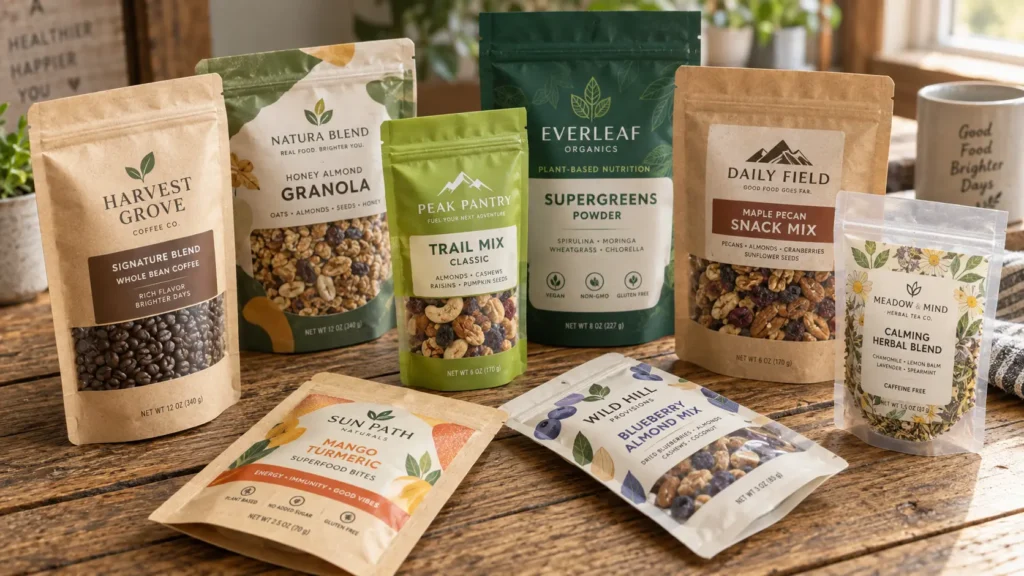
A stand-up pouch has a bottom gusset that allows the filled pouch to stand upright. It may include a zipper, spout, cap or tear notch, depending on how the product will be used.
Advantages of a stand-up pouch:
- The filled pouch can stand upright and display its front panel clearly.
- A visible front panel supports branding, instructions and product information.
- A zipper, spout or cap can support repeated opening or controlled dispensing.
- The format can suit dry goods, liquid refills and personal-care products.
What Is a 3-Side Seal?
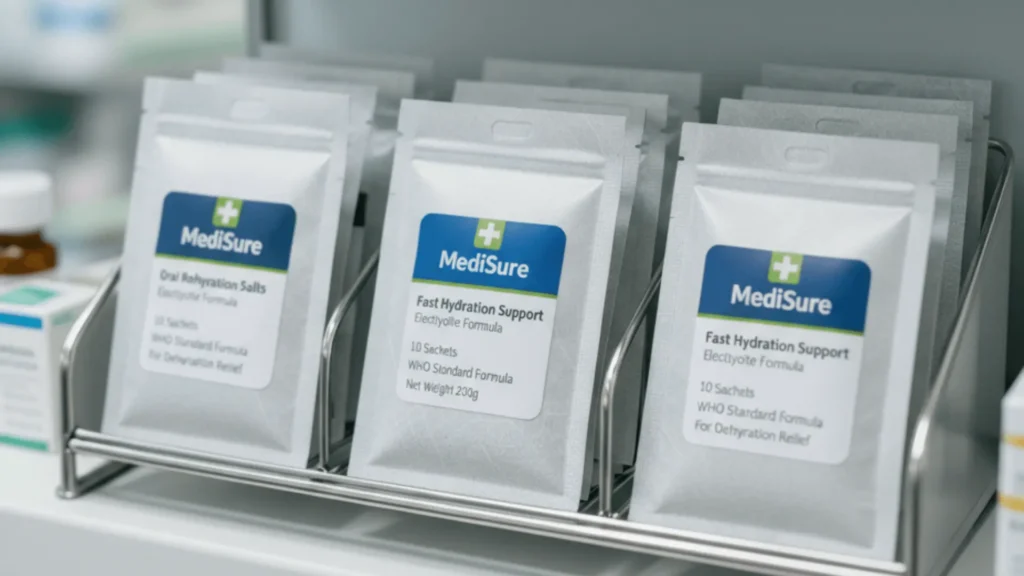
A 3-side seal has three sealed edges and one open edge for filling. Its flat format commonly suits sample, single-use portions, small liquid packs and products placed inside an outer box.
Advantages of a 3-side seal:
- It is compact when empty, which helps storage and secondary packing.
- It can suit samples, trial sizes and portion-controlled products.
- A broad front and back panel can carry branding, instructions and product information.
- Multiple flat packs can be grouped efficiently in cartons, mailers or kits.
Stand-Up Pouch vs 3-Side Seal: 6 Essential Checks
1. Product Type and Fill Volume
Product form and fill volume should guide the pouch format. Powders, small portions and trial packs may suit a 3-side seal, while a refill liquid or product used over several occasions may benefit from a stand-up pouch with a suitable closure.
Before choosing the pouch size, provide:
- Target fill weight or volume
- Product density, where available
- Required headspace
- Expected pouch dimensions
- Product flow and viscosity
2. Shelf Display
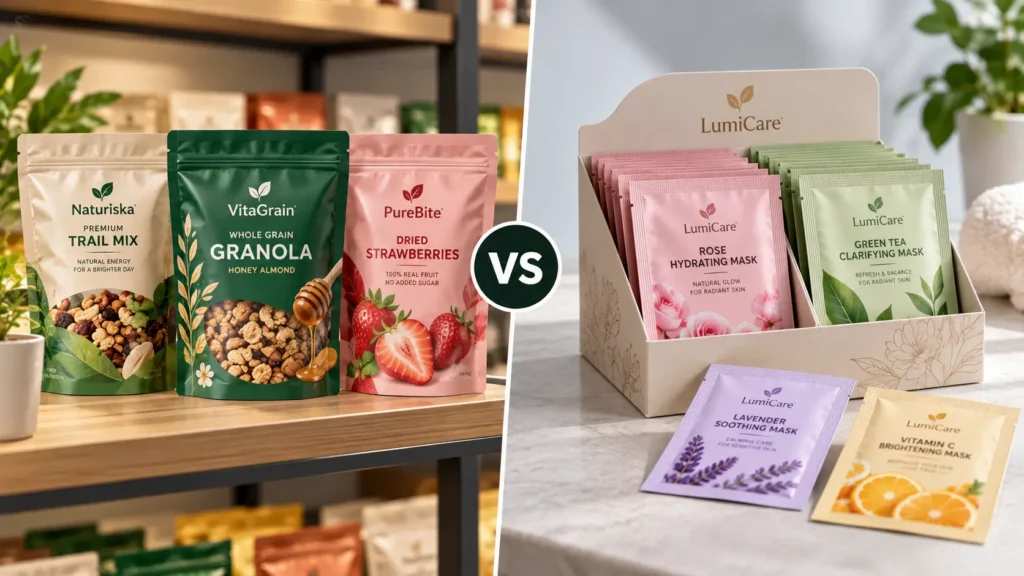
A stand-up pouch can display its front panel clearly on a retail shelf or in an online product photo. A flat 3-side seal may need a carton, tray or display box for upright presentation.
For e-commerce, consider how the pouch will be photographed, placed in a mailer and handled during delivery. Choose an upright format only when the product actually needs to stand; a compact flat pack may be more practical for a sample kit or multipack.
3. Filling and Sealing
Your filling method can affect the pouch choice. A 3-side seal has a flat filling edge, while a stand-up pouch has a bottom gusset and may include a zipper, spout or cap.
Share the filling method, machine type, target output and sealing conditions with the supplier. For manual packing, test whether operators can open, fill and position the pouch without contaminating the seal area.
4. Storage and Shipping
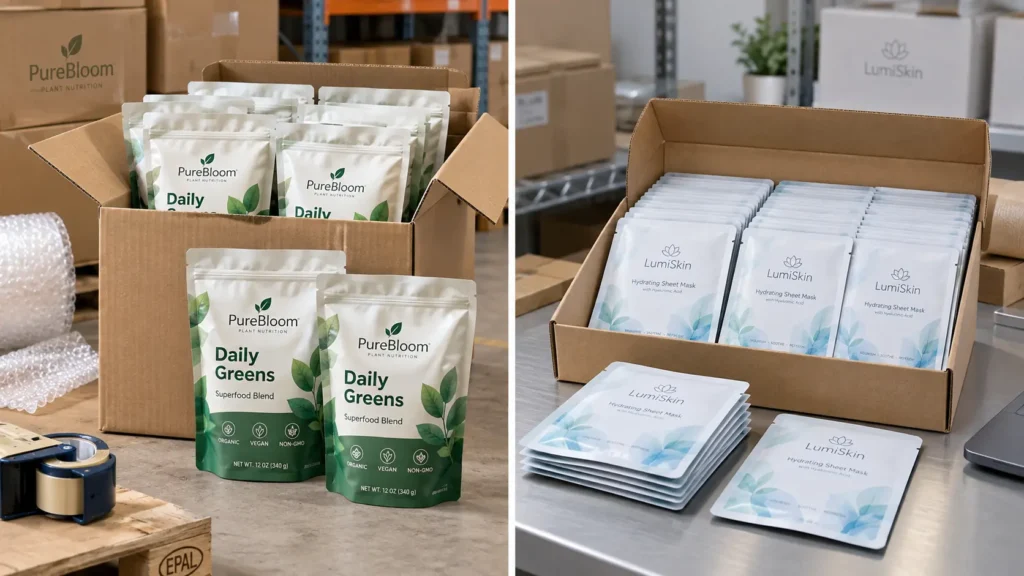
Compare empty and filled dimensions separately. Both formats can be lightweight, but a filled stand-up pouch becomes deeper when its bottom gusset opens after filling. Measure cartons, pallets, shelves and delivery mailers before finalising the size.
Products exposed to stacking, vibration or squeezing need filled-pack handling tests. Check corners, seals, gusset formation and closure fit after transport simulation or repeated handling.
5. Opening and Reuse
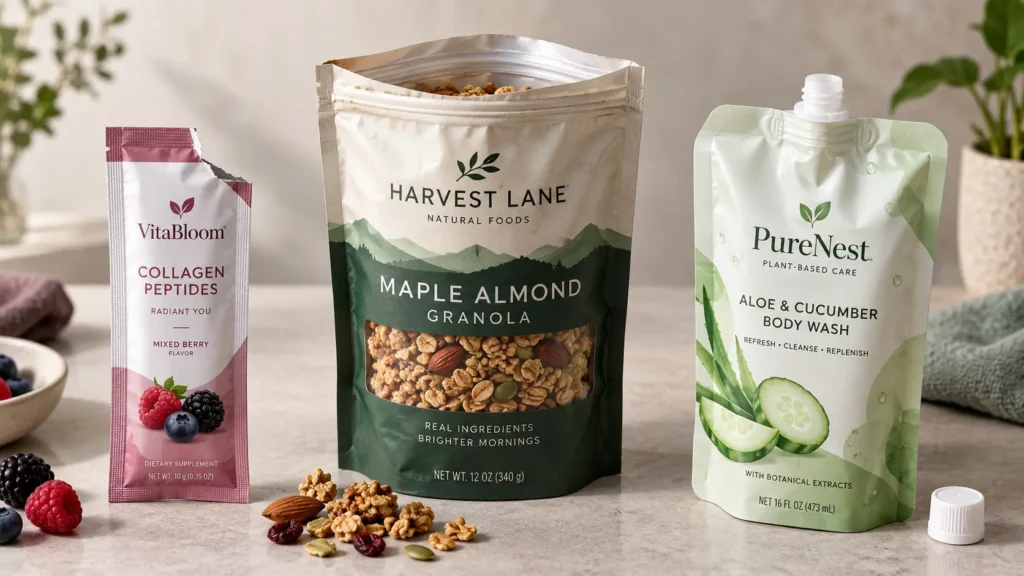
Choose the opening feature based on the product and how customers will use it:
- Tear notch: Suitable for single-use or portion packs
- Zipper: Suitable for dry products that customers open several times
- Spout and cap: Suitable for liquid or semi-liquid products that require controlled dispensing
Resealing does not replace barrier and seal testing. Confirm whether the product needs protection from moisture, oxygen, light, oil or fragrance between uses, then test the selected pouch with the actual product.
6. Artwork and Printing
Both formats can be custom printed, but their artwork templates are different. A 3-side seal usually has flat front and back panels with trim and seal clearances. A stand-up pouch also needs the front, back, bottom gusset and closure areas mapped on the dieline.
Keep logos, legal text, barcodes and batch areas away from seals, notchs, folds and curved corners. Prepare your artwork, colour references and the required finished size. Review a proof and, where possible, a filled sample before production approval.
Which Products Suit Each Pouch Format?
Consider stand-up pouch packaging for dry retail products, liquid refills, personal-care products, sauces and products that need a zipper, spout or cap.
Consider a 3-side seal for cosmetic samples, food or household samples, powder portions, trial packs, event packs and subscription kits. The flat profile is useful when products are grouped in an outer carton or shipped as samples.
Note: For food-contact packaging, contact EAN Label to confirm which material is suitable for your product.
How Should You Choose the Packaging Material?
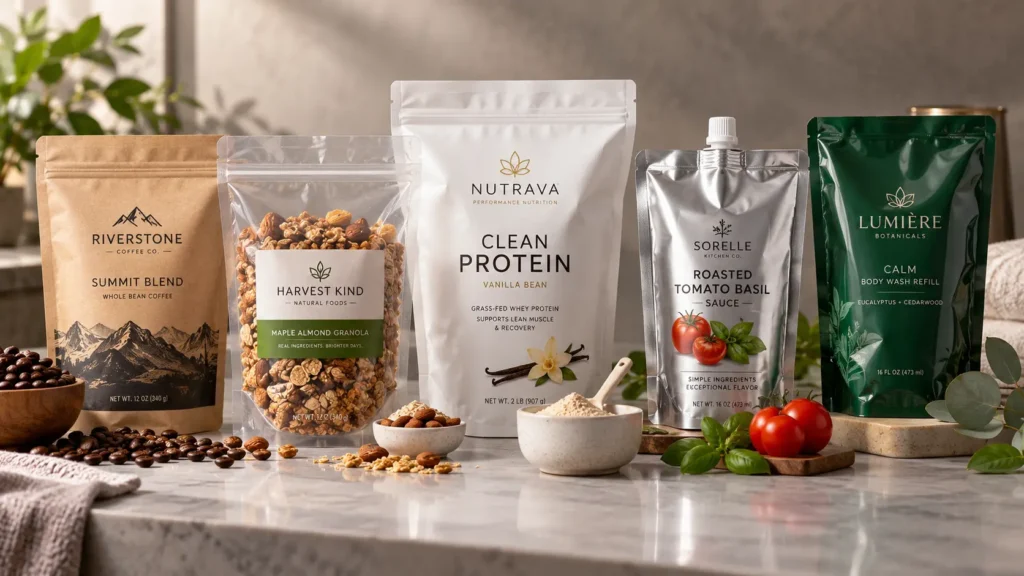
The packaging format alone does not determine the material. Select a suitable material considering whether the product needs protection from:
- Moisture
- Oxygen
- Light
- Oil or fragrance
- Punctures
- Drops and repeated handling
Choose between clear, opaque, matte and metallic finishes only after confirming the required barrier protection. A material name alone cannot confirm the product’s shelf life. Request a sample and test the finished packaging for product compatibility, seal integrity and handling performace.
Note: For a broader comparison, read EAN Label’s packaging material guide before choosing the final material.
What Information is Needed for a Pouch Quotation?
To receive an accurate quotation, provide the following information:
- Product type, formula or physical form, and target fill weight or volume.
- Finished width, height and, for a stand-up pouch, gusset depth.
- Material or barrier priorities, such as moisture, oxygen, light or oil resistance.
- Opening feature, spout or cap position, tear notch and resealing needs.
- Artwork file, print colours, barcode and variable-data requirements.
- Quantity by size or design, packing method and delivery location.
- Sample, testing and approval requirements.
When comparing suppliers, use the same dimensions, material, closure, print coverage, quantity and delivery terms. Ask for current MOQ, production schedule and technical suitability for the specific job, these details vary by specification.
Why Work with EAN Label for Custom Pouch Printing?
EAN Label supplies flexible packaging formats including stand-up pouch, 3-side seal, spout pouch, 4-side seal and sachet roll form. This gives brands a single packaging partner when a project needs pouches alongside labels or custom boxes.
EAN Label operates an ISO 9001:2015-certified quality management system. In 2022, the Malaysia Book of Records recognised EAN Label for the fastest packaging printing production lead time and fastest stand-up pouch printing production lead time. Confirm the current MOQ, schedule, delivery and material sustainability with the team for your pouch specification.
For a practical recommendation, send the product details, fill volume, dimensions, artwork and intended use through the EAN Label contact page. You can also review the 3-side seal format and stand-up pouch format before requesting a quotation.
Choosing packaging for a new product? Send us your product photo or sample, fill weight or volume, required pouch size, quantity and artwork. EAN Label can help you compare stand-up pouch and 3-side seal options based on your filling, storage and customer-use requirements. WhatsApp us today to discuss your flexible packaging and request a quotation.
Frequently Asked Questions
Contact Us
Want to know the price or need us to recommend the best solution for you? Just fill in the simple form below and we’ll assist you right away.
Enquiry Form
Request a Quote?
Share your requirements and connect with our expert custom packaging manufacturer. Contact EAN Label today!
Connect with us!