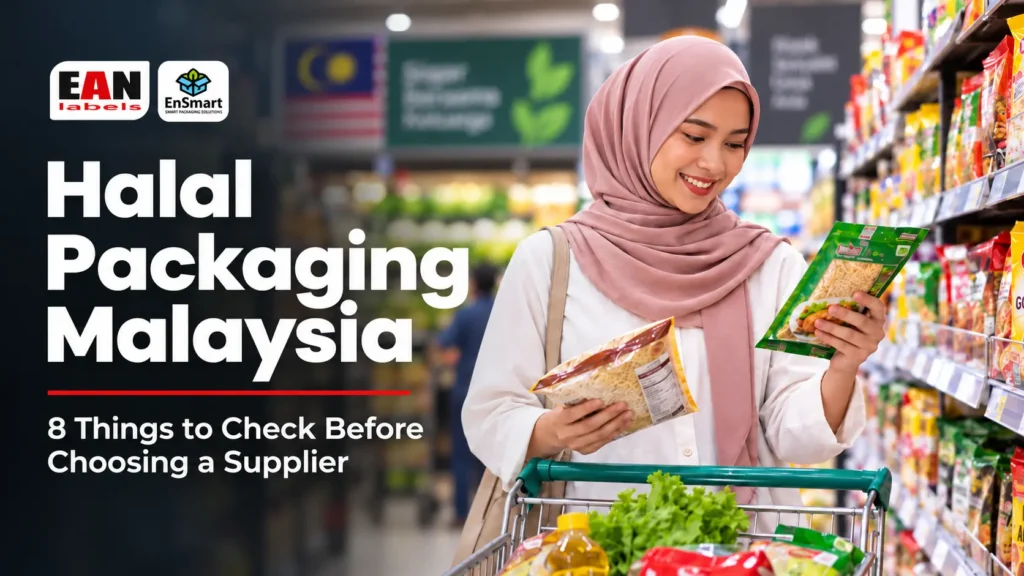
If you sell a Halal-certified food product, choosing a packaging supplier is not only about comparing price and print quality. The supplier should also understand Halal logo responsibility, food packaging materials, artwork risks and production control.
The right supplier for Halal packaging in Malaysia should help you prepare the job properly before printing starts. This reduces avoidable mistakes and gives your team more confidence when approving the final packaging.
Quick answer: Look for a supplier that understands Halal logo responsibility, recommends packaging based on the food product, keeps clear job records, checks customer artwork, uses preventive pre-production checks, performs quality checks and supports the packaging format you need.
What Should You Look for in a Halal Food Packaging Supplier?
A suitable supplier should understand both food packaging and the practical care needed for packaging used by Halal-certified brands.
| What to check | Why it matters |
|---|---|
| Halal logo handling | Helps ensure the supplier prints from customer-approved artwork and does not alter the logo incorrectly |
| Food packaging experience | Helps match the packaging material and format to the product, filling method and storage needs |
| Material handling and production cleanliness | Helps reduce mix-ups and maintain better control during storage, handling and production |
| Clear SOP and job records | Keeps artwork versions, specifications and customer approvals organised and traceable |
| Artwork review before printing | Helps identify issues such as incorrect dimensions, low-resolution images, folds, seals or barcode placement |
| Pre-production verification | Confirms the final artwork, material, size and job specifications before production starts |
| Quality checking after printing | Checks the printed result, colour, finishing and overall output against the approved job |
| Packaging format capability | Ensures the supplier can support the packaging format required for the product |
These are practical checks for choosing a packaging supplier. Halal certification requirements and approval remain under the relevant Halal authorities.
1. Does the Supplier Understand Halal Logo Responsibility?
The Malaysia Halal logo is not a normal design icon. JAKIM states that JAKIM and the relevant state Islamic authorities, MAIN or JAIN issue the Malaysia Halal Certification Certificate and authorise use of the logo.
MYeHALAL also states that valid certificate holders may use the logo for the relevant goods or premises. The certificate and logo must not be traded, transferred or have their content changed.
The Halal Malaysia official guidance also identifies JAKIM, JAIN or MAIN as the recognised authority and shows the official Malaysia Halal logo components.
A careful packaging supplier should therefore understand that:
- the customer must confirm the relevant approval
- the printer does not issue Halal certification
- the logo should not be copied from the internet or another product
- the authorised logo file should not be stretched or visibly distorted
- the customer should approve the correct final artwork
For packaging that carries the Malaysia Halal logo, EAN Label works from the approved artwork and confirmation supplied by the customer. The team can flag a visibly distorted or poor-quality logo file before printing.
2. Does the Supplier Understand Food Packaging Materials?

A packaging supplier should recommend the material based on the product. Using the same structure for every food product can lead to poor packaging performance.
Simple examples include:
- Powder: May need moisture protection to reduce clumping
- Oily food: May need suitable grease and barrier performance
- Frozen food: Needs material that can handle low-temperature storage
- Sauce or liquid: Needs strong seals and good leak resistance
- Snacks: May need moisture or oxygen protection to help maintain freshness
- Multi-use products: May benefit from a resealable zipper
The supplier should also ask about the filling method, sealing method, storage condition and expected shelf life. Product or machine testing may be needed before the final material is confirmed.
These are packaging performance considerations, not separate Halal certification rules.
For a broader overview, see our food packaging supplier guide.
3. How Does the Supplier Manage Cleanliness and Contamination Risks?
Food brands should look beyond the printing machine. They should also consider how carefully a supplier manages its production environment.
Useful questions include:
- Are materials stored in an organised way?
- Are production areas kept clear and orderly?
- Are there general cleanliness and handling controls?
- Is waste managed properly?
- Are production instructions followed?
- Are quality checks recorded?
These are practical supplier-selection considerations rather than a Halal audit checklist.
4. Does the Supplier Have Clear SOP and Documentation?
Clear records help the supplier print the job that the customer actually approved.
For a packaging project, the important records may include:
- job specification
- material specification
- artwork version
- customer approval
- production instructions
- quality check records
Artwork version control is especially important. File names such as “final.pdf”, “final-new.pdf” and “final-confirmed.pdf” can easily cause confusion. A better process uses one approved file name or revision number and records who approved it.
Good documentation reduces the risk of printing the wrong SKU, old artwork, incorrect size or wrong material.
If ingredient sources, supplier details, certification status or product information are unclear, the brand should verify them before approving the final artwork. The packaging printer should not make that Halal decision on behalf of the brand.
5. Does the Supplier Check Artwork Before Printing?
Ready artwork does not always mean production-ready artwork.
Depending on the packaging type, the review may cover:
- final dimensions
- the cutting and folding guide, also called a dieline
- bleed, which is the extra printed edge outside the cut line
- the safe area for important text and logos
- folds, side panels and sealing areas
- barcode and QR code position
- image resolution and colour setup
- text position
- artwork version
- material and finishing setup
- visible distortion in a supplied logo
EAN Label can flag printing and artwork issues for the customer to review. It does not certify ingredient information, approve claims or decide whether a product is Halal.
For general file preparation, read how to prepare artwork for printing.
6. Does the Supplier Prevent Problems Before Production?
A good packaging supplier should not only correct problems after printing. Its process should include checks that find avoidable artwork and production issues before the job is released.
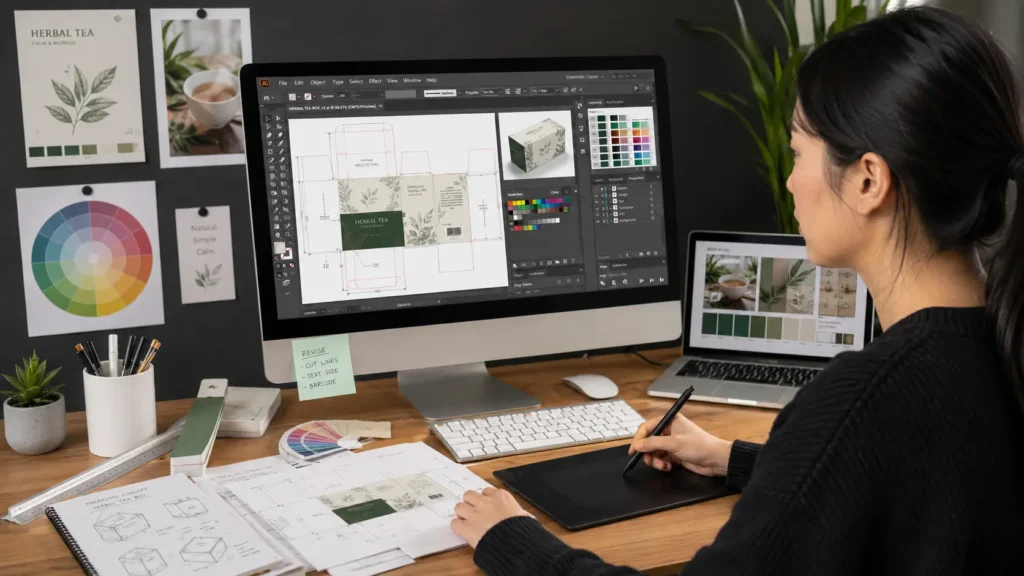
Here is a simple example:
- Corrective action: The wrong artwork is discovered after printing, so the job must be fixed or printed again.
- Preventive action: The artwork version, dieline and job specification are checked before production.
Preventive checks can catch issues such as an old file, incorrect dimensions, a low-resolution image, a barcode across a seal or a finishing instruction that does not match the quotation.
7. Does the Supplier Have a Clear Pre-Production and QC Process?
Artwork approval should not lead directly to printing without a separate production check.
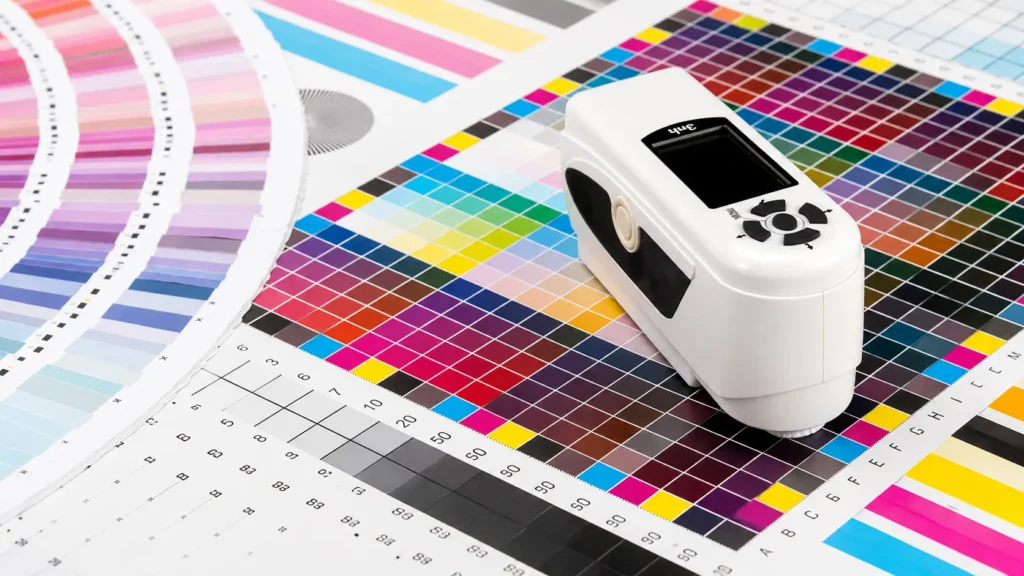
EAN Label follows a structured flow:
- Receive packaging requirements: Collect the product, format, size, quantity, filling method, storage needs, deadline and artwork.
- Review packaging and artwork: Check the layout, dimensions, panels, seals and key item positions.
- Confirm material and production specification: Match the agreed material, structure and finishing to the job.
- Final artwork confirmation: Send the correct proof to the customer for approval.
- Pre-production check: Recheck the approved file, job specification and production setup.
- Printing: Produce the job using the confirmed setup.
- Quality check: Check the printed job against the agreed production specification.
Keeping the pre-production check as a separate step helps confirm the correct artwork and job details. It also makes the responsibilities between the customer and printer clearer.
8. Can the Supplier Support the Packaging Format You Need?
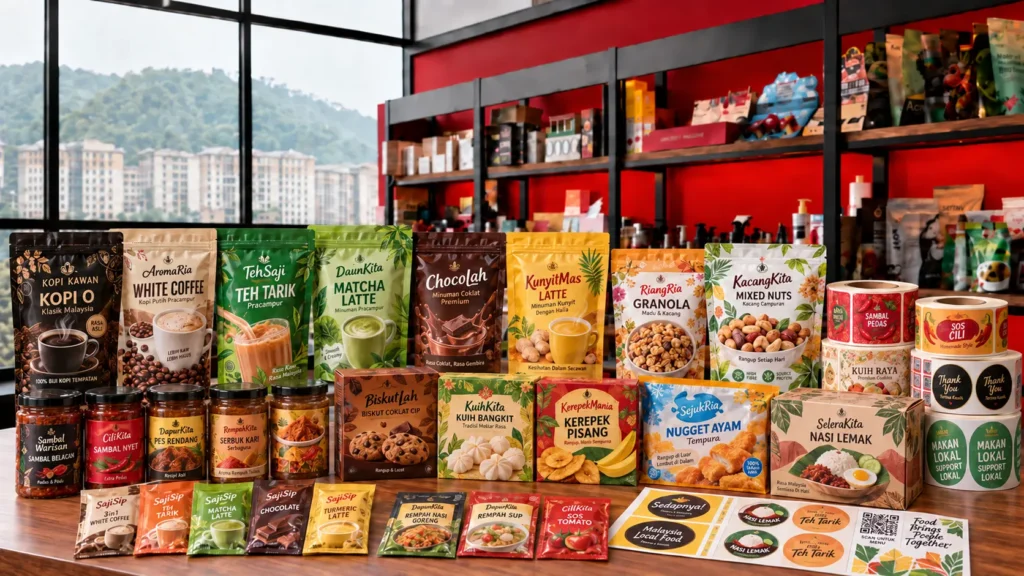
The supplier should support a format that works with the food product, filling method, storage and selling channel.
EAN Label produces flexible packaging such as stand-up pouches, 3-side seal pouches, 4-side seal pouches, center seal with gusset, sachets/roll form and cup seals.
The team also produces sticker labels and custom packaging boxes.
You do not need to choose a format only because it is popular. Share the product and packing details first so the supplier can discuss suitable options from a packaging and printing point of view.
Common Mistakes When Choosing a Packaging Supplier
Avoid these common mistakes:
- Choosing only by the lowest price.
- Sending artwork without confirming the final version.
- Assuming “ready artwork” is automatically production-ready.
- Choosing material without considering the food product.
- Ignoring folds, seals or filling requirements.
- Treating the Malaysia Halal logo as an ordinary design element.
- Choosing a supplier without a clear pre-production and quality check process.
The better question is whether the supplier can clearly explain how your packaging will be reviewed, approved, produced and checked before delivery.
How EAN Label Handles Packaging for Halal-Certified Food Products
EAN Label Industry Sdn Bhd is a packaging printing manufacturer. The team understands the practical considerations involved when printing packaging for Halal-certified food products.
EAN Label can:
- work with customer-supplied and approved Halal logo artwork
- discuss packaging size, format and material from a printing point of view
- review customer-supplied artwork before production
- flag visible artwork and production risks
- confirm packaging and job specifications
- maintain a separate pre-production check
- perform printing and quality checks
EAN Label does not issue Halal certification. Its role is to prepare and produce packaging carefully based on the information and approvals supplied for the job.
EAN Label follows internal SOPs for artwork review, job preparation, production and quality checking before packaging is released. The team can also discuss the packaging size, format, material and structure from a practical printing point of view.
This means a completed customer file is not automatically sent straight to printing. The team first reviews the artwork and production details so potential issues can be identified earlier.
Frequently Asked Questions
Contact us for a quotation and share your product type, packaging requirements and quantity. Our team can recommend a suitable packaging material and format for your product.
EAN Label prints based on the approved artwork and information provided by the customer.
- Sticker Labels: from 1 piece
- Flexible Packaging: selected options from 100 pcs
- Sachet Roll Form: from 500 metres
- Custom Packaging Boxes: from 500 pcs
- Sticker Labels: 1–3 working days after final artwork confirmation
- Flexible Packaging: 7–10 working days after final artwork confirmation
- Custom Packaging Boxes: around 10 working days
EAN Label supports customers with packaging recommendations, artwork checking, production preparation, printing and quality checking.
Contact Us
Want to know the price or need us to recommend the best solution for you? Just fill in the simple form below and we’ll assist you right away.
Enquiry Form
Request a Quote?
Share your requirements and connect with our expert custom packaging manufacturer. Contact EAN Label today!
Connect with us!