Inside EAN Label: How We Maintain Print Quality and Earn Brands’ Trust
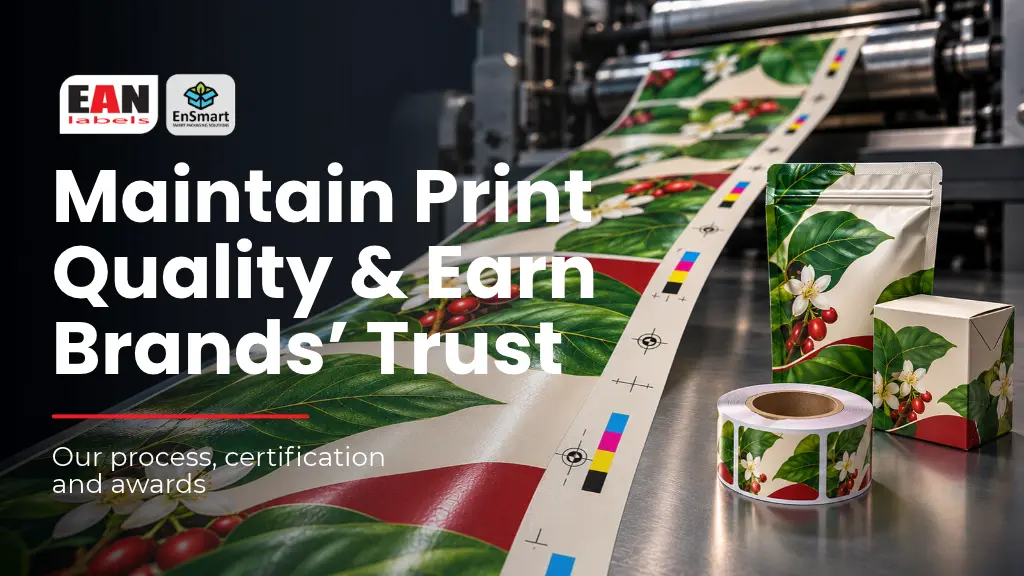
EAN Label print quality begins with a clear agreement on what a pack must do and how its approved design should look. That means checking the product requirements and artwork before printing, reviewing the result during production and checking the finished packaging before it is released. Our ISO quality-management certification and industry awards add context, but the most useful proof for a client is how those steps work on their own order.
Why Does Print Quality Matter to a Brand?
Print quality affects more than appearance. A text error can confuse shoppers or disrupt a packing line. A badly cut label may cover information; a box with wrong dimensions may not fit. Colour shifts can make related products look disconnected.
These problems matter when a brand sells several variants or orders packaging repeatedly. Agree on the dimensions, material, artwork and functional features before production, then compare the result with that reference. Our guide to packaging quality control tests explains format-specific checks in more detail.
What Guides the Way We Work?
Our Core Values in Packaging and Printing
EAN Label describes its values as Customer First, Integrity, Positive & Growth Minded, Result Oriented and Innovative. In a packaging project, those words should lead to practical behaviour: listening to how a client fills and sells the product, explaining what needs testing, recording the approved version and looking for a better way to handle recurring problems.
Integrity includes explaining what a proof can establish. It shows colour and layout, while product suitability and the accuracy of claims still need the product owner’s approval and, where relevant, a filled-pack test.
Understand Your Users and Your Products
Before recommending a pack, we consider both the product and the people who handle it. What is inside? How will the packing team fill it? How will customers carry, open and store it? The answers shape the pack’s material, size and finish, as well as the information customers need to read.
For a range with several products, we also consider how customers will tell the variants apart. A list of products, designs and quantities helps us keep the branding consistent while giving each variant the correct artwork and pack specification.
How Do We Maintain Print Quality?
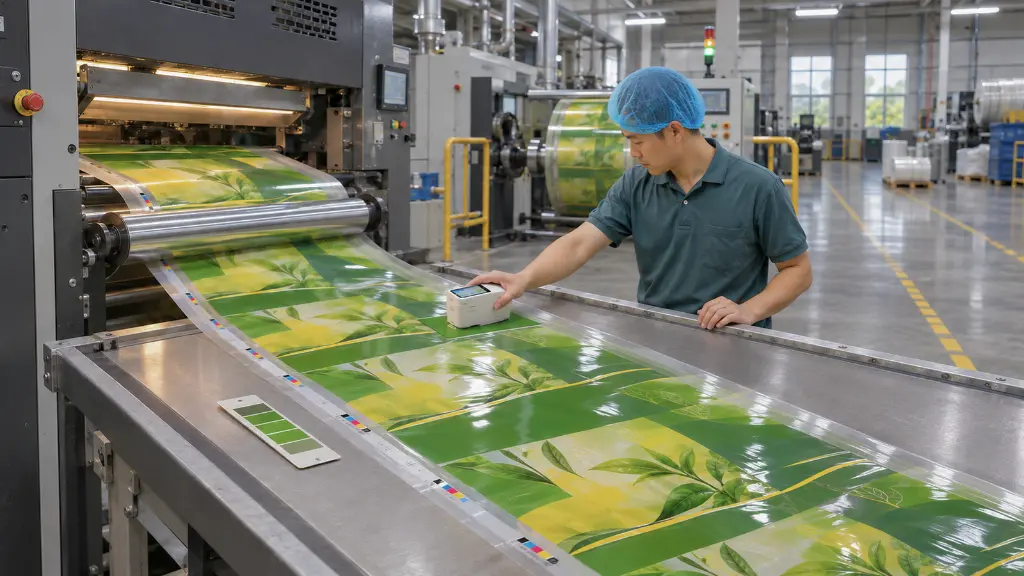
EAN Label’s published process moves from consultation and sample testing to artwork confirmation, production and quality checking. A sample assesses the proposed format; artwork approval fixes the version to print; production checks compare the result with the agreed specification.
Confirming Specifications and Artwork Before Printing
An approved file works best when it is paired with a clear specification. For a label, that may include the container surface, dimensions, material, finish and where the label will be applied. For a pouch, it may include fill amount, dimensions, seal area and how the pack opens. For a box, the packed product’s dimensions and weight matter alongside the artwork.
The client should approve the final wording, variant, barcode and claims. The printer can check print layout, while the product owner remains responsible for the information’s accuracy and permissions. One clearly named approved file for each SKU reduces version mix-ups.
A Bernama report on FAMA’s Harumanis inspection shows why wording needs checking before it reaches a label. Officers told a seller to use the actual name of imported mangoes and display the required labelling information after they were marketed as Harumanis Perlis. Accurate printing cannot correct an unverified product claim.
Colour Proofing and Production Checks
A colour proof gives the client something more dependable to review than a screen image alone. Displays vary, and the same design can appear different on paper, film or a special finish. On a proof, the buyer can check the main colours, text size, image position and whether important details remain clear at the pack’s actual size.
An approved proof can guide production checks. If the material, finish or printing method changes, review the result again; an old sample may no longer represent it.
Checking Finished Packaging Before Delivery
The finished pack is where the earlier decisions come together. A label needs readable printing, the intended cut and suitable placement. A pouch needs the right dimensions and a sealing area that works with the agreed filling process. A box needs to fold or assemble as intended and hold its contents without obscuring important information.
Checks depend on the product and format. Visual inspection addresses the print; fit and handling may need a filled sample. A changed container, filler or distribution method calls for another review.
How Does This Help Our Clients?
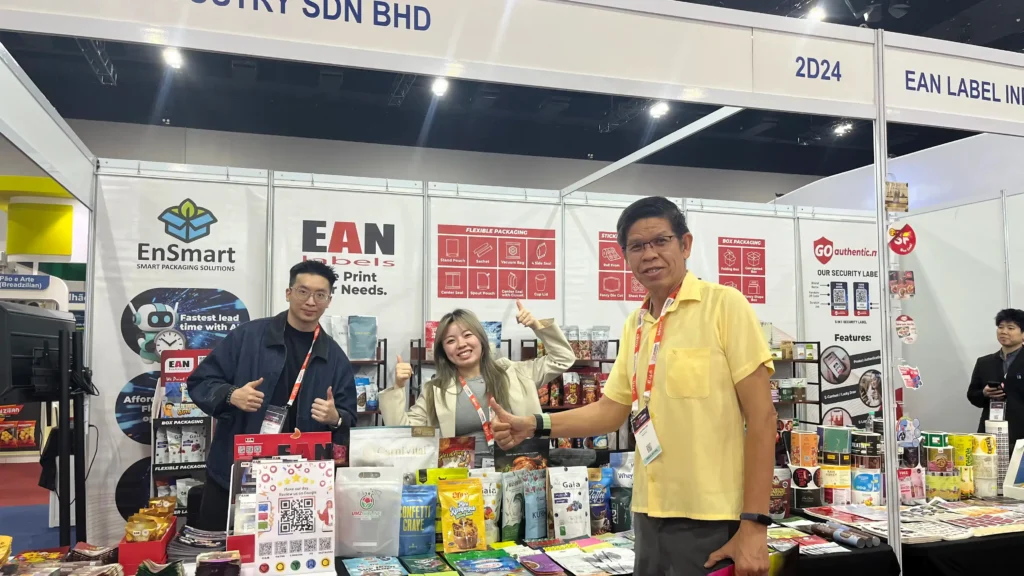
A clear approval trail records the agreed version and product-specific details. It gives marketing, procurement, production and quality teams a common reference for new and repeat orders.
Keeping Product Information Consistent Across Labels, Pouches and Boxes
A range may use product labels on bottles, flexible packaging for another format and printed boxes for kits or retail presentation. The logo and product naming can follow one brand system, while each component still needs its own approved size, layout and product information.
A cleanser bottle and its box may share a variant name but display it differently. Check each printed component at its real size so customers and packing staff can identify the same product on both.
Supporting New Designs, Repeat Orders and Multiple Products
When a range expands, the easiest part to miss is often the small difference between variants: a flavour, size, barcode or usage instruction. A separate approved file and quantity for each SKU gives the production team a clearer basis for printing and helps the client check that the correct design reaches the correct product.
For a repeat order, the previous approved artwork, order reference and physical sample establish what should be matched. Flag changes to the container, material, finish or product information. EAN Label supports projects from small-scale to large-scale production; the current schedule depends on the actual order.
What Does ISO 9001:2015 Certification Mean?
EAN Label holds ISO 9001:2015 certification. ISO explains that ISO 9001 sets requirements for a quality management system: how an organisation structures and improves processes so it can meet customer and applicable requirements consistently. It is a management-system credential, not a certificate declaring every individual label, pouch or box suitable for every product.
How a Quality Management System Supports Consistent Work
Documented specifications, responsibilities, approvals and records give different people a shared reference. They also help the team investigate an issue and improve the process behind it.
A documented system supports consistency, but the finished order still needs to be checked against the approved specification.
What Clients Should Still Check for Their Own Products
ISO 9001 does not replace the product owner’s checks. A food brand may need to confirm food-contact suitability; a cosmetic brand must approve its claims and product information; another product may have different labelling or handling requirements. The relevant material, print and pack should be assessed with the actual product and its intended use.
Recognised Awards
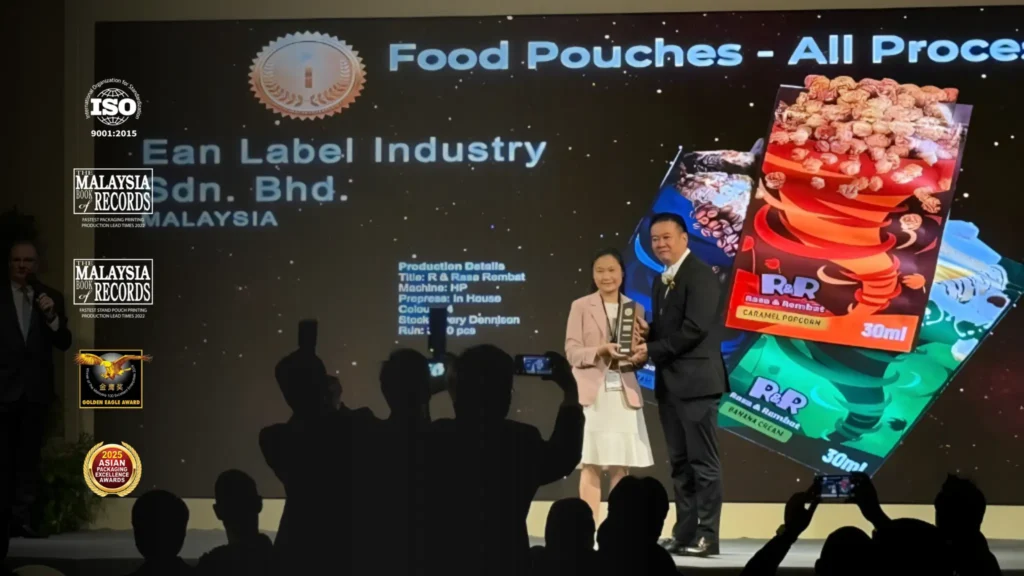
Each award recognises a particular achievement; none replaces a current sample, specification or production schedule.
EAN Label’s company profile records 2019 Golden Eagle Business Award recognition and two Malaysia Book of Records recognitions in 2022: The Fastest Packaging Printing Production Lead Time and Fastest Stand-Up Pouch-Printing Production Lead Time. A current lead time still depends on the pack, quantity, finish and artwork approval.
At the 2025 Asian Packaging Excellence Awards, EAN Label received Gold for Digital Food Pouches, Silver for Digital Packaging- Soft Carton and Bronze for Digital Labels 4 Colour.
What These Achievements Mean for Clients Today
The awards show experience in speed and particular printed work; the client’s decision still rests on the current job. Review the relevant sample, agree on the specification and ask for a schedule based on every component in the project. A recognisable certificate is most useful when it supports a process the buyer can see in practice.
What Are We Working to Improve Next?
EAN Label’s stated direction includes improving packaging, processes and people. For clients, that ambition should show up in clearer project information, easier approvals and support as a range grows.
Improving Quality, Speed and Client Support

Our 2022 speed records are part of the company’s history, while today’s service is measured by how well a specific order is planned and completed. We want to improve the connection between quick production, careful approval and responsive support.
In 2024, Labels & Labeling reported EAN Label’s investment in a Hontec MPX350 finishing machine. It brings processes including hot stamping, embossing and die-cutting into one production pass, expanding the finishing options available for their clients’ products.
The Star’s coverage of IPMEX Malaysia 2026 described the printing, packaging and labelling industry’s focus on automation and workforce skills. For clients, such progress matters when it makes approvals clearer, repeat orders more consistent and delivery schedules more dependable. Those are practical measures for our own improvement, regardless of the technology used.
Sharing Packaging Knowledge with More Malaysian Brands
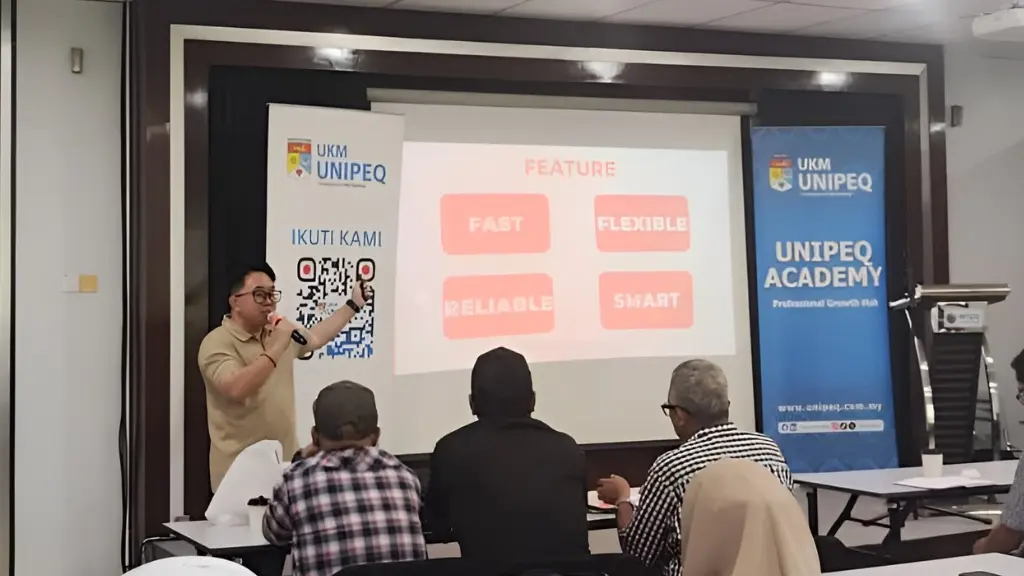
Sharing what goes into a finished pack is another part of our direction. We collaborate with public-sector organisations through packaging talks and take part in government-related exhibitions to share practical knowledge with SMEs and startups. We discuss how to prepare for a packaging project, use packaging to express a brand, and make a product more noticeable to customers. Our aim is to help new and growing businesses make informed choices before they print.
We also brought the subject to students during our packaging-awareness visit to SJK(C) Lick Hung. They explored how a pack moves from an idea through printing and checking to the shop shelf. By speaking with both businesses and students, we want to make the work behind packaging easier to understand.
Good packaging starts with the actual product, an agreed specification and a print result the team can check. Send EAN Label your product details, pack formats, quantities by design artwork status and required date on WhatsApp to discuss the right sample and a project-specific quotation.
Frequently Asked Questions
Contact Us
Want to know the price or need us to recommend the best solution for you? Just fill in the simple form below and we’ll assist you right away.
Enquiry Form
Request a Quote?
Share your requirements and connect with our expert custom packaging manufacturer. Contact EAN Label today!
Connect with us!