Automotive Packaging Malaysia: What Does Your Automotive Product Need from Its Packaging?
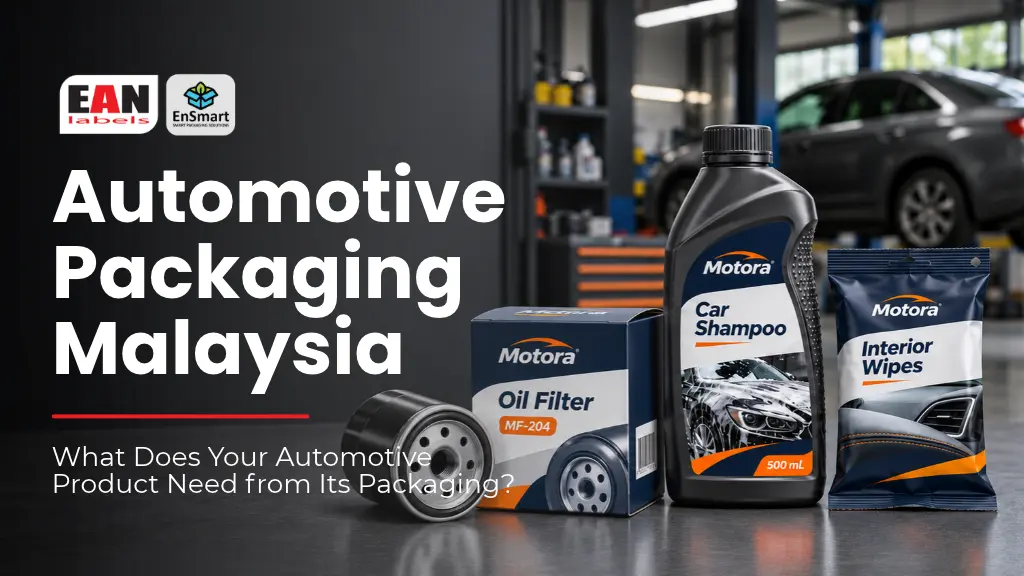
Automotive packaging in Malaysia should be chosen around the product, its application surface, how it will be stored and handled, and the information buyers need to identify it. A car-care product packaging may need a durable product label, while a spare part may need a fitted box and a clear part-number or barcode label. Engine oil and certain automotive chemicals may also have specific marking requirements that the product owner must confirm before printing.
What Automotive Product Are You Packaging?
Start automotive product packaging decisions with the actual product and how it will be distributed. Its weight, shape, contents and handling conditions determine whether the pack needs protection, identification, presentation or a combination of these. A light accessory and a heavy metal part may both be sold in boxes, but they will not necessarily need the same box structure.
Spare Parts and Accessories
For filters, fittings, small replacement parts and accessory kits, record the dimensions and weight of the item as supplied to the buyer. Note any sharp edges, oily surfaces or loose pieces. A carton may make the part easier to identify on a shelf; an insert or a separate shipping carton may be needed to limit movement during delivery. Check a packed sample before repeating one box specification across several parts.
Car-Care Products and Automotive Fluids
For a product in a bottle or other container, first check the surface available for a label, then how the filled container will be stored and handled. A car shampoo label may face water and repeated handling. An engine-oil bottle also needs the brand’s product information, but its official marking route is a separate matter. If a fluid may be classed as a hazardous chemical, ask the responsible product team to confirm the applicable label information before designing the print area.
Which Packaging Components Does Your Product Need?
Start automotive product packaging decisions with the actual product and how it will be distributed.
| Product Situation | Suggested Packaging | Information to Confirm |
|---|---|---|
| A fluid is sold in a bottle or container | Product label | Container surface, usable label area and exposure during use |
| A part or kit needs grouping and retail presentation | Printed box | Packed dimensions, weight and movement inside the box |
| Wipes or a soft accessory need an individual pack | Flexible packaging | Contents, film suitability, opening and sealing method |
| Several similar items need stock identification | Part-number or barcode label | Approved code for each item and where it must be scanned |
| A workshop wants customers to see their next service details | Window sticker | Windscreen placement, writable space and ease of removal |
Labels for Bottles, Containers and Parts
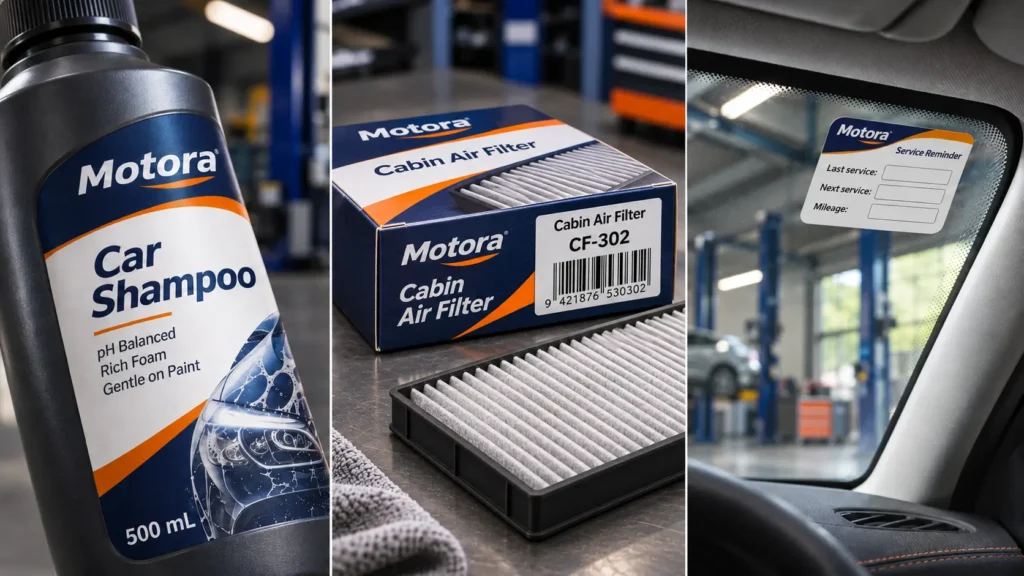
A product-information label tells buyers what is inside and how to identify the variant. A part-number or barcode label supports stock control. A void sticker or product-verification sticker serves a different purpose. Tell the printer which job each label must do, where it will be applied, and whether staff apply it by hand or machine. If the product is regulated, a custom printed label must not be mistaken for an official conformity mark.
For workshops and service centres, a window sticker can show the last service date and the next service date or mileage on the inside of a vehicle’s windscreen. Leave enough space to write or print those details clearly. Check its position, adhesion and removal on glass so it remains useful without obstructing the driver’s view.
Boxes for Spare Parts and Product Kits
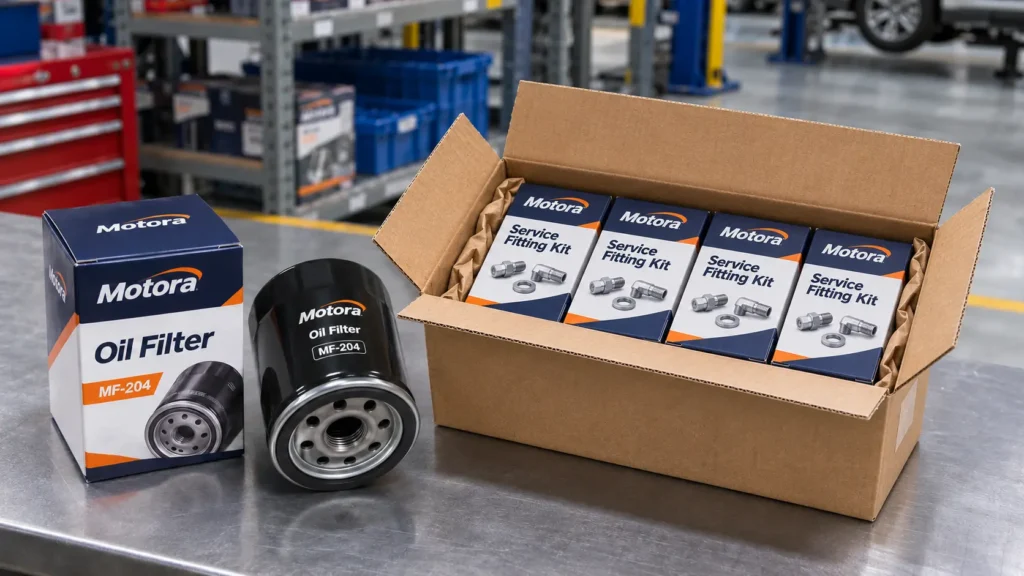
A box should fit the packed part and carry the approved product identification. For lightweight filters, fittings or accessory kits, art card or boxboard may suit a printed retail carton. Heavier or fragile parts may need corrugated cardboard for greater strength during handling and delivery.
For a kit, list each item and consider an insert if the parts could move or rub together. A printed retail carton may still need a separate outer carton for warehouse stacking or courier delivery.
Flexible Packaging for Car-Care Wipes and Soft Accessories
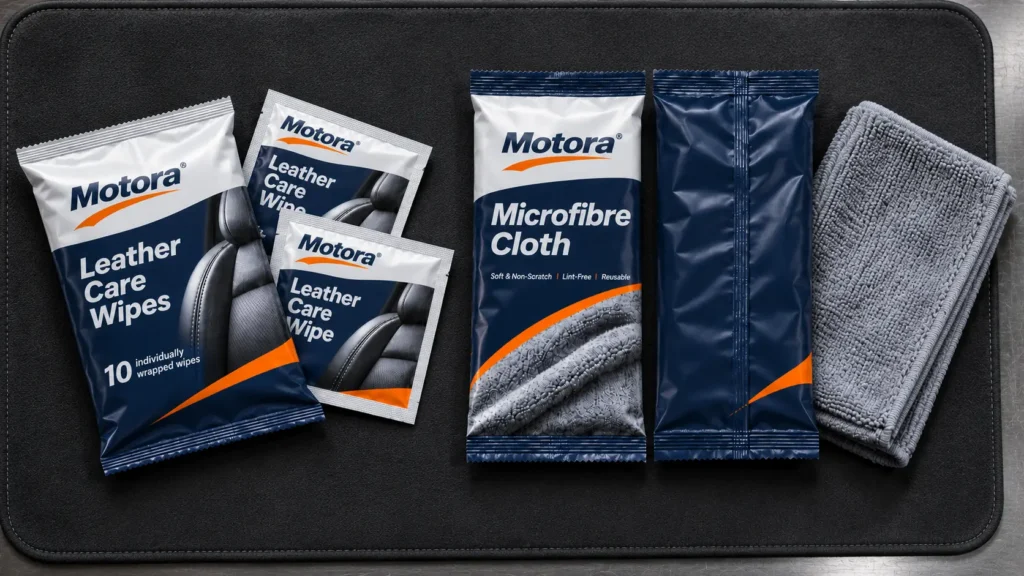
Different products call for different pack shapes. A 3-side seal may suit a single-use car-care wipe; a center-seal pack may suit a folded microfibre cloth or polishing pad.
For a wet wipe, check that its solution is compatible with the film and seals. If customers will open the pack repeatedly, discuss how it will close and whether the wipes will remain suitable during use. Confirm the format with the filling partner and check a filled sample before production.
How Do You Choose a Label That Stays Readable and Attached?
For automotive label printing, the face material, adhesive, print and protective finish all affect how the label performs. A paper label may suit a dry retail carton, while bottles or parts exposed to moisture, oil or frequent handling may need a stable film label and adhesive. Ask for a recommendation based on the actual pack and conditions, then test a printed sample.
Check the Surface and Shape
Plastic, glass, metal and coated cartons can call for different adhesives. Curved, textured or squeezable surfaces also affect whether a label sits flat. Measure the usable area on the filled container or part, leaving clear of handles, seams and closures. If one label design is intended for several container sizes, apply it to each before approving the dimensions.
Consider Oil, Moisture and Handling
Explain when the label is applied and what happens afterwards. A clean bottle on the filling line presents a different application surface from a part that already carries oil. Consider condensation, spills, wiping and frequent handling during storage and use. Check whether the label remains attached and the important text stays readable under those conditions.
How Can Packaging Help Buyers Identify the Right Product?
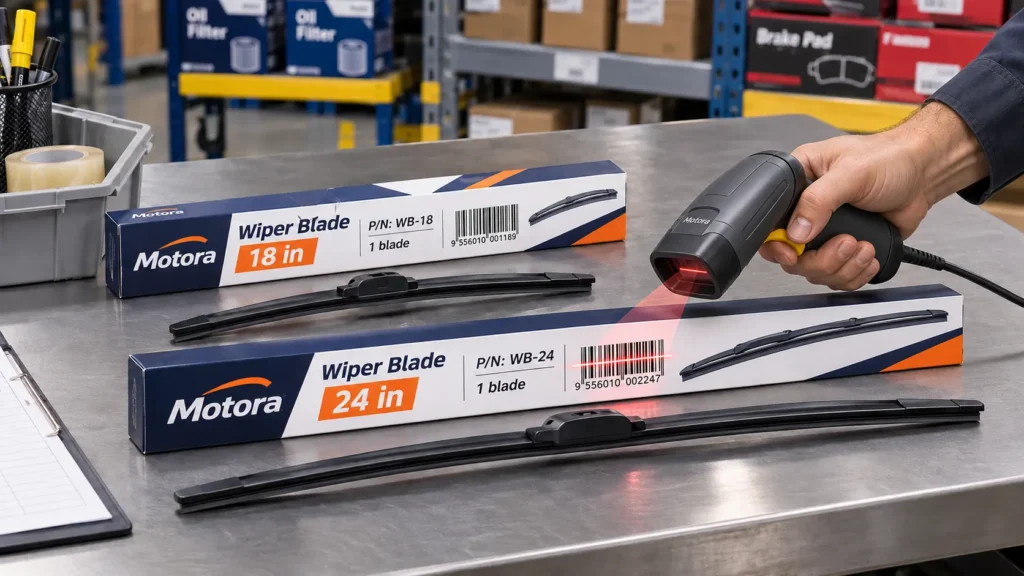
Clear identification reduces confusion between similar parts and product variants. For distributors and workshops, the name on the box is only part of the answer: the part number, size, quantity and barcode, where used, must match the item inside.
Part Numbers, Product Variants and Barcodes
Give the printer an approved data list for every SKU, including the exact part number and barcode file. Reserve enough space and contrast for scanning, then scan a final printed sample rather than relying only on the design file. If a code changes between variants, identify that change clearly in both the artwork and the order quantity. Barcode label printing should follow the buyer’s actual inventory and sales workflow; a barcode is useful only when its data is maintained correctly.
Clear Information Across the Label and Box
Check the product name, part number, size or variant, and pack quantity against the same master record. A kit box should describe the parts it actually contains. Leave any approved warnings or batch fields readable and away from folds, seams or other stickers. Assign one responsible team to approve the final information on every component so a new label is not paired with an old box design.
Are There Automotive Packaging and Labelling Requirements in Malaysia?
Automotive products do not all follow one labelling rule. The product’s classification and use determine which requirements apply. Confirm those requirements with the brand’s regulatory or compliance team before releasing artwork; the packaging printer can reproduce approved information but does not certify the product.
SIRIM Certification and Labelling for Engine Oil
In Malaysia, motor vehicle engine oils are subject to the Trade Descriptions (Certification and Marking of Engine Oil for Motor Vehicle) Order 2024, which establishes certification and marking requirements to help address counterfeit engine oil in the market.
Under the SIRIM Certification Scheme for Genuine Engine Oil, applicable engine oil products must be certified by SIRIM QAS International and display an official conformity label on top of the container lid.
For engine oil manufacturers and brands, these requirements should be considered when planning container packaging and label placement. Product labels should clearly communicate essential product information, while the packaging must accommodate the official conformity marking without confusing it with ordinary branding stickers or product verification labels.
Hazard Labelling Requirements for Automotive Chemicals
Automotive chemicals such as certain degreasers, cleaning agents and maintenance fluids may be subject to specific labelling requirements depending on their chemical classification and intended use.
Malaysia’s Occupational Safety and Health (Classification, Labelling and Safety Data Sheet of Hazardous Chemicals) Regulations 2013 establish hazard communication requirements for applicable chemicals supplied for workplace use.
According to the Department of Occupational Safety and Health (DOSH) guidelines on CLASS Regulations, labels for applicable hazardous chemicals must include information such as product identification, supplier details, hazard pictograms, signal words, hazard statements and precautionary statements.
For automotive chemical packaging, sufficient label space, clear printing and suitable label materials are important to keep the required information visible and legible during handling, storage and use.
Do You Need a Void Sticker or Product Verification Sticker?
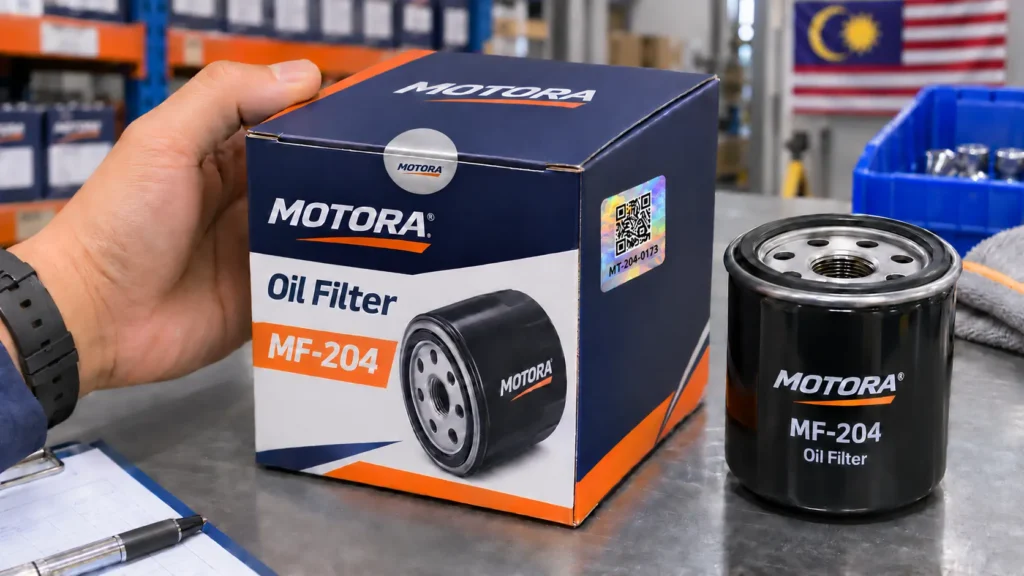
A void sticker is intended to show visible evidence that a selected closure has been opened. A product-verification sticker supports a separate check, such as a brand-managed code or authentication process. Decide what a distributor or buyer should be able to check, then choose a position and sticker construction that work on the actual bottle or box. A hologram genuine sticker adds a visible security feature. If buyers need to verify a product, pair it with a unique code and a brand-managed checking process; the hologram alone does not confirm authenticity.
Product identification also matters beyond the shelf. In April 2026, Bernama reported charges in a trademark case involving lubricants and oil filters; the accused pleaded not guilty. For a brand managing several automotive products, clear identifiers and a maintained verification process can help buyers check what they receive.
What Information Should You Prepare for a Quotation?
A clear brief helps a printer compare suitable materials and give you a realistic production schedule. Prepare:
Product type and whether you need labels, boxes, flexible packs or a combination.
Container or part dimensions, weight and application surface.
Quantity per SKU or artwork design, including planned repeat orders if relevant.
Filling, storage and handling conditions that affect the print or pack.
Approved artwork, part-number and barcode files, plus any confirmed official or hazard information.
Delivery location and required date.
Ask for samples or proofs where fit, adhesion or small text needs checking. Your product team should confirm the product classification and approve any required wording.
Make every product in your range easy to identify, from warehouse to workshop. Contact EAN Label with your product details, quantities per SKU and delivery date. Our team can help you coordinate labels, boxes and flexible packaging, then provide a clear quotation and a fast, order-specific production schedule.
Frequently Asked Questions
Contact Us
Want to know the price or need us to recommend the best solution for you? Just fill in the simple form below and we’ll assist you right away.
Enquiry Form
Request a Quote?
Share your requirements and connect with our expert custom packaging manufacturer. Contact EAN Label today!
Connect with us!