How to Choose Pet Food Packaging for Dry Food, Wet Food, Treats and Supplements
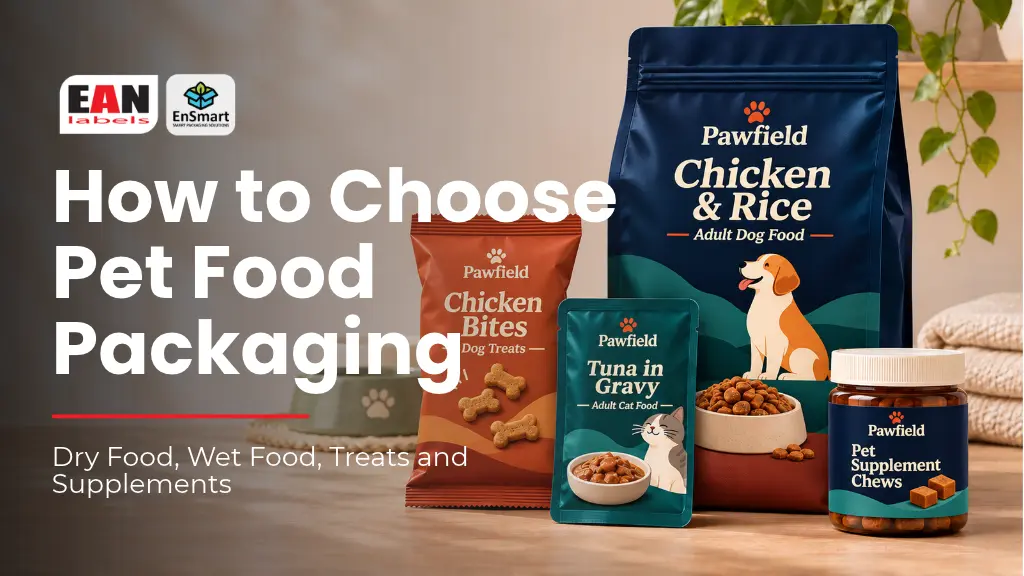
The right pet food packaging depends on what is inside, how it is filled and processed, and how customers will store and use it. Dry kibble, wet food, treats and supplements can need different pack sizes, materials and closures. Choose the format only after confirming the product’s protection needs and the production process.
This guide helps Malaysian pet brands and procurement teams compare practical packaging options, prepare product information and check a filled sample before printing.
What Does Your Pet Product Need from Its Packaging?
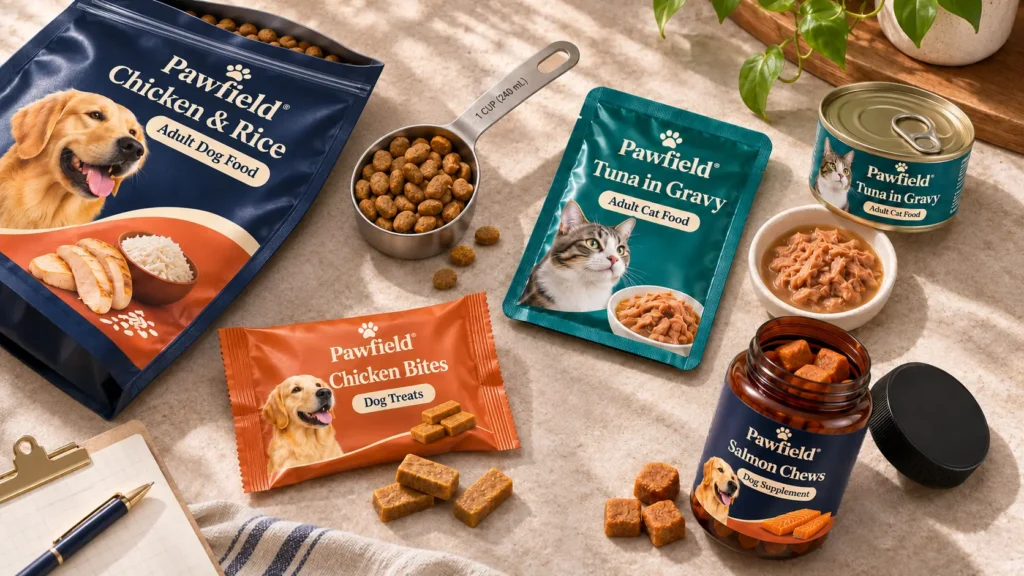
Start with the product itself. The same pouch shape can be made from different materials, and a format that suits a dry treat may not suit a wet food production line. Tell the packaging supplier whether the contents are dry, moist, oily, powdered or liquid, and whether the finished pack will be stored at room temperature or chilled.
Dry Food and Treats
Kibble and dry treats are often sold in packs customers open more than once. Decide on the fill weight, how much space the contents need, and whether a zipper would make repeat use easier. Oily or strongly scented treats may need a different film structure from a dry biscuit; confirm the required protection with the product team.
Wet Food
Wet food is commonly packed in cans or single-serving pouches, including 3-side seals made for wet food. Chilled food, frozen food and food intended to be shelf-stable after heat processing do not share one packaging specification.
Supplements
Which Pet Food Packaging Format Fits Your Product?
Compare formats by portion size, filling method and how the buyer will use the pack. These are starting points, not claims that every material or structure suits every pet food.
| Product and Use | Suggested Format | What to Check |
|---|---|---|
| Retail pack of dry food or treats | Stand-up pouch | Fill weight, shelf display and storage after opening |
| Larger dry food bag opened repeatedly | Center-seal bag with gusset | Filled weight, handling strength, easy-open top and zip-lock closure |
| Individual treats or sample portions | Center-seal pack | Portion size, filling equipment, opening and seal area |
| Wet food | Can with a printed label, or a 3-side seal | Filling method, heat process, container or film suitability, and seal validation |
| Supplement in a bottle or jar | Product label and, if needed, a printed box | Container surface, approved information and box fit |
Stand-Up Pouches and Gusseted Bags for Dry Food
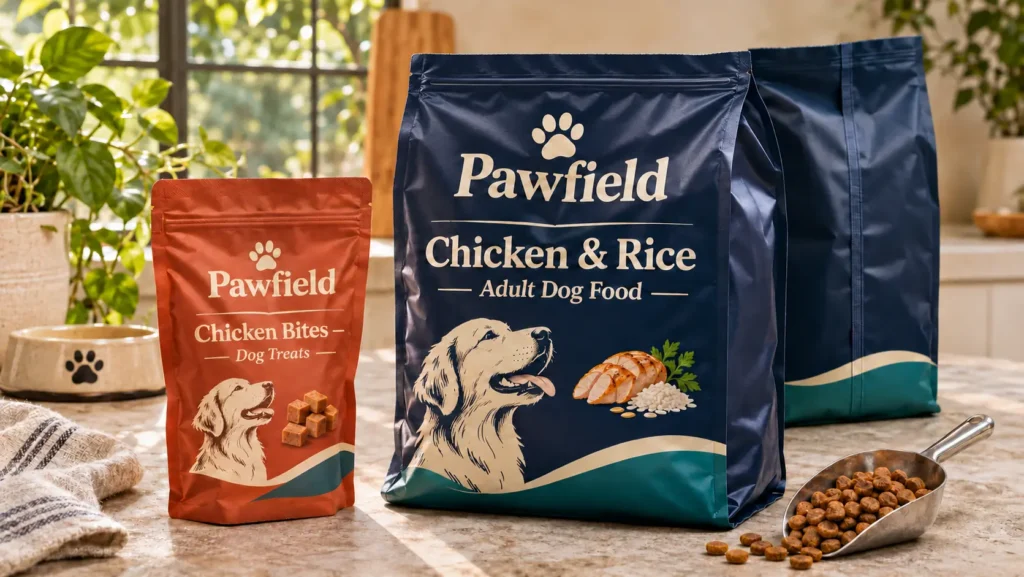
A stand-up pouch can suit a retail pack of dry food or treats. For a larger bag of dry pet food, a center seal bag with gusset gives the kibble more room and helps the filled pack hold its shape. If customers will use the bag over several days, specify an easy-open top and resealable zipper. Confirm that these features are available for the chosen bag, then check how the filled pack opens, closes and handles.
Note: For more detail on how this format works and when to use it, read our stand-up pouch guide.
Center Seal for Treats
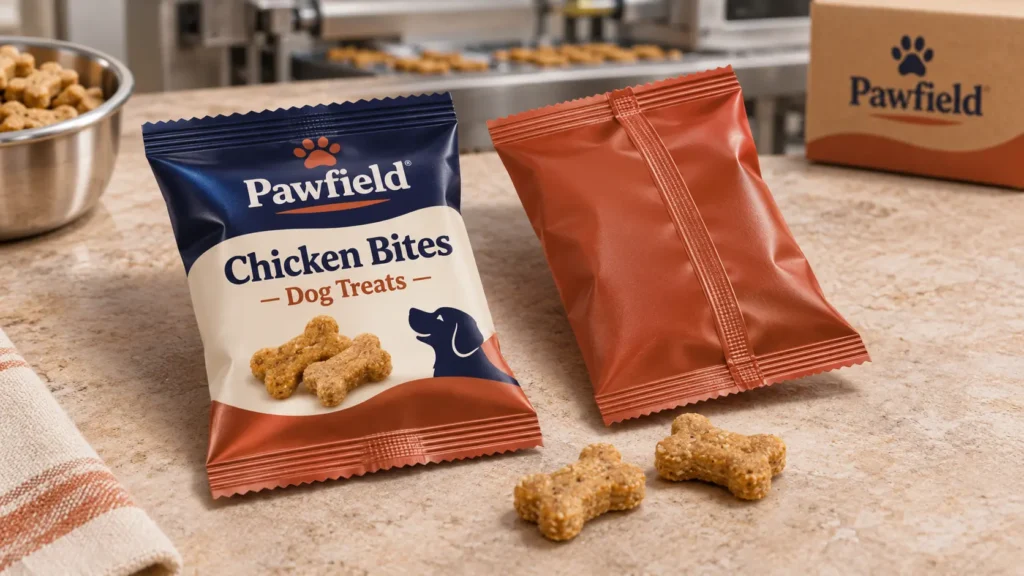
A center seal pack can suit an individual treat or a small group of biscuits when its shape works with the filling line. Confirm the portion size, film and seal needed for the treat’s storage conditions.
Cans and 3-Side Seals for Wet Food
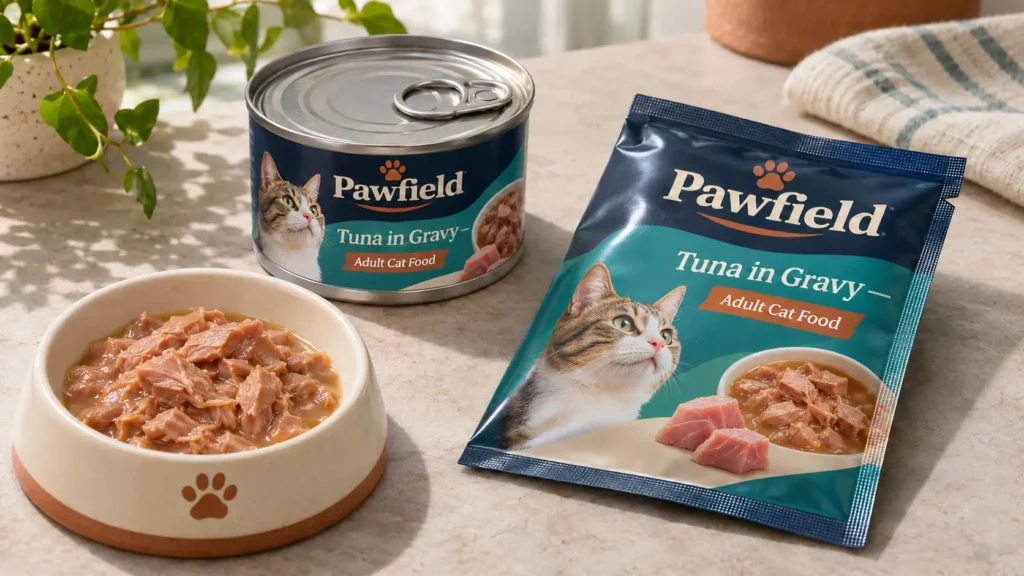
For wet food, a can offers a familiar rigid pack, while a 3-side seal can give customers a convenient single portion.
A 3-side seal alone does not make a pouch suitable for wet food. Give the supplier and filler the product details, fill weight, storage conditions and intended shelf life. Have your product team confirm that the proposed material and seals suit the finished food.
Labels and Boxes for Supplement Containers
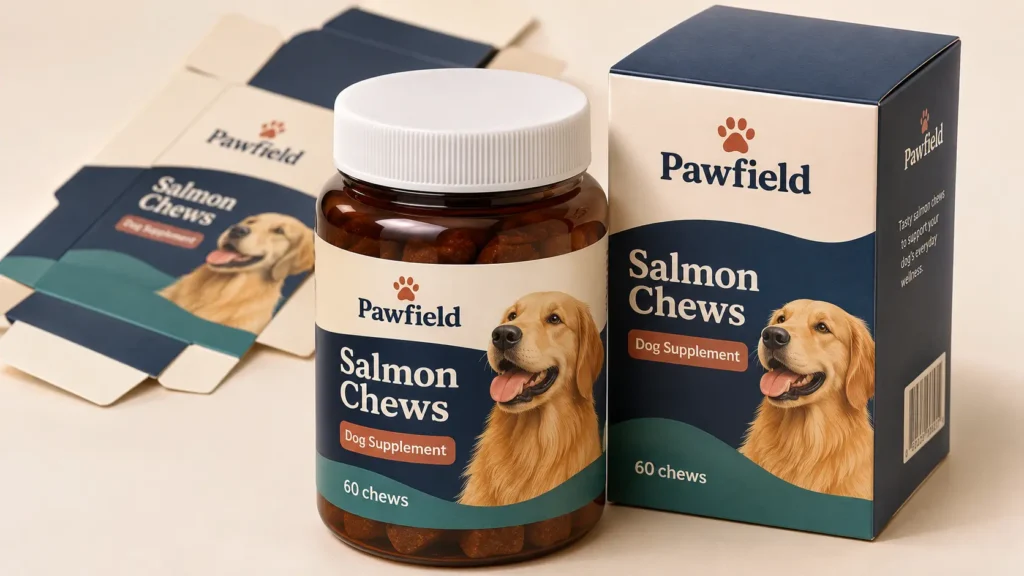
When a supplement already has a bottle, tub or jar, a label may carry its approved identity and use information. A box can group several items or provide additional presentation and information space. Measure the real filled container, including the cap, before setting either size. Check that a label stays readable on a curved surface and that the finished box closes properly.
How Do You Choose the Material and Closure?
Choose the material for the contents and storage conditions, then choose the features customers actually need.
Protection Needed for Dry Food and Treats
Check whether your dry food or treats need protection from moisture, oxygen or light, especially if they contain oils or have a strong aroma. Metalised film can help limit exposure; aluminium film is often considered when a stronger barrier is needed. Ask the supplier to confirm that the complete pouch and its seals suit your product.
Protection matters after opening, too. Pet Lovers Centre Malaysia’s food storage advice recommends sealing opened pet food bags properly. For a larger pack, consider a closure customers can use repeatedly.
Note: For more on box and flexible packaging materials, read our packaging material guide.
Seals and Processing Needs for Wet Food
Wet food places particular demands on the sealed pack. The seal must suit the actual contents, filling equipment, storage conditions and any heat process.
Portion Size, Zippers and Easy-Open Features
Choose a portion that matches one feeding or a realistic period of use. A zipper may help with a multi-use dry food pack, while a v-cut may be more useful on a single-serving pack. Check where these features sit relative to printed information and the sealing area. If the product needs another container after opening, explain that clearly on the pack.
What Should Appear on the Packaging?
Make the product name, intended animal, variant and pack size easy to recognise. Leave room for the product information approved by your regulatory or quality team, as well as batch and date printing where required. A small treat pack may have limited print space, so confirm what must be printed on the individual pack and what belongs on an outer pack before finalising the layout.
Malaysia’s Department of Veterinary Services lists feed labelling regulations. The exact requirements depend on the product and sales market; ask your responsible team to approve the final wording and claims. If the range contains different recipes or animal species, give each artwork version a clear name and check every proof separately.
What Information Do You Need for a Packaging Quotation?
Prepare these details for a project-specific quotation:
Product: Type of food, fill weight and storage conditions.
Pack: Preferred format, approximate dimensions and whether it will be opened once or repeatedly.
Quantity: Total order and quantity for each design or product variant.
Filling: Your filler’s machine requirements. For wet food, include the process details and material specification approved by your product team.
Artwork: Current files and whether the product information has been approved.
Timing: Required delivery date.
These details help the printer quote the correct pack and production plan for each variant.
Planning a new pet food range? Contact EAN Label about suitable packaging, labels and boxes for your products. Share your requirements, and our team can help you compare options and prepare a tailored quotation.
Frequently Asked Questions
Contact Us
Want to know the price or need us to recommend the best solution for you? Just fill in the simple form below and we’ll assist you right away.
Enquiry Form
Request a Quote?
Share your requirements and connect with our expert custom packaging manufacturer. Contact EAN Label today!
Connect with us!