Healthcare and Pharmaceutical Packaging: What to Check Before You Print
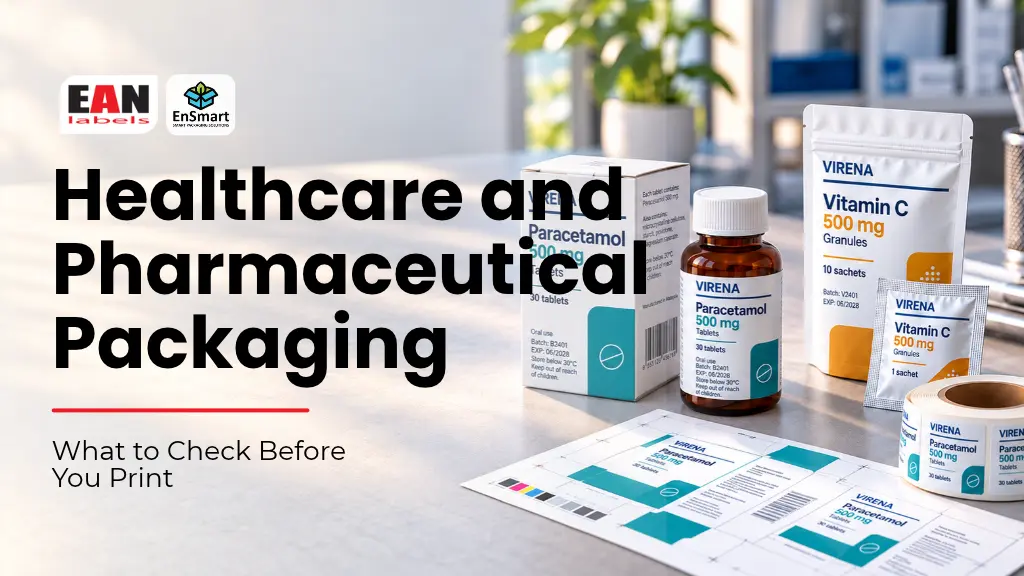
Pharmaceutical packaging in Malaysia may involve a printed box, a flexible pack, a product label or several components together. Before printing, confirm what each component must do, how it will be stored and which product information has been approved. The requirements depend on whether you are packaging a registered medicine, a health supplement or another healthcare product.
What Should You Confirm Before Choosing Pharmaceutical Packaging Components?
Start with the product category and its existing pack. Is the item a registered medicine, a supplement or another healthcare product? Does it already have a bottle or container? These answers help determine which printed components you need.
Record the product dimensions, filled weight and storage conditions. List each strength, size or variant separately so its packaging can be specified correctly.
Then choose each component by the job it must perform:
| Component | Possible Role | First Detail to Confirm |
|---|---|---|
| Packaging box | Outer pack for a bottle, container or grouped items | Finished product size and required printed information |
| Flexible packaging | Pouch or sachet for a suitable product and filling process | Contents, fill amount, film and sealing method |
| Product label | Information on a bottle or other container | Surface, label size and approved wording |
| Void sticker | Evidence that a chosen opening has been disturbed | Closure position and desired result after opening |
How Do You Choose a Packaging Box?
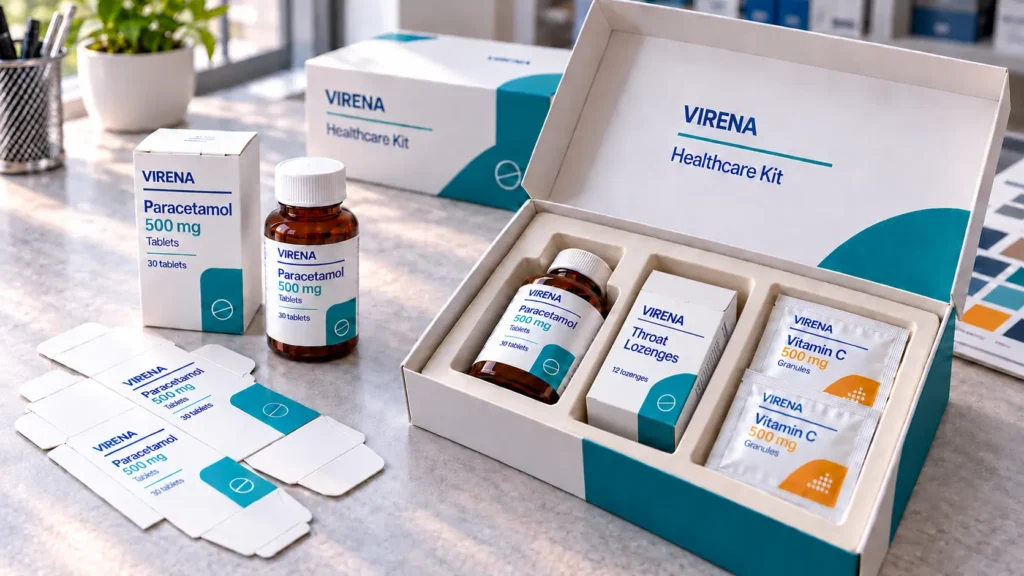
For a medicine bottle, supplement jar or healthcare kit, choose a packaging box around the finished product. Its internal size, closure and board strength should suit the contents, while its panels leave room for approved product information.
Folding Cartons for Bottles and Retail Products
A folding carton can provide an outer pack for a medicine bottle or similar retail product while storing flat before assembly. Check that the flaps stay shut and approved wording remains clear of folds and glued areas.
Boxes for Kits and Multiple Items
A healthcare kit containing several individually packed items needs a box that keeps them together and easy to identify. Arrange the items in a sample box to check fit and ease of packing. If kit versions differ, make each version easy to identify on the outside.
Inserts for Product Fit and Protection
An insert can help hold medicine bottles, tubes or individually packed healthcare items in position. Shape it around the actual products, including caps and raised features, so they do not move freely inside the box.
Test the assembled pack during expected handling. If special protection is required, have the quality team define the checks.
When Should You Use Flexible Packaging?
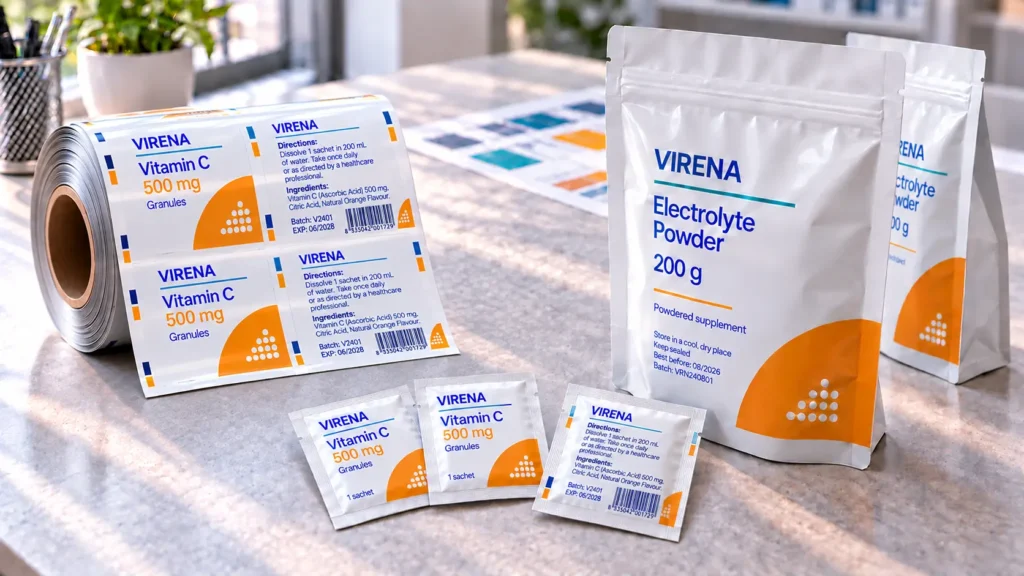
Flexible packaging may suit a healthcare product supplied in portions or a larger pack, if its approved specification and filling process allow it. Decide how the product will be used, then confirm the film structure and closure with the filler and product team.
Sachets for Single-Use Products
A sachet may hold one measured portion of a suitable medicine or health supplement when that pack format has been approved for the product.
Before requesting a quote, confirm whether your filler needs sachet roll form or individual empty sachets, then share the fill amount, opening method, print space and machine requirements so the supplier can check availability and compatibility.
Pouches for Larger or Multiple-Use Products
A stand-up pouch or another suitable format may offer more space for a healthcare product and its information. Consider how the product will be filled, opened and stored after opening. Add a reclosable feature only if it suits the approved use and storage conditions.
Ask the filler to check the proposed dimensions, opening and seal area. For direct product contact, the product and quality teams must confirm material suitability.
Material and Seal Requirements
For a medicine or health supplement, the film and seals must suit the specific contents and approved storage conditions. A flexible pack often has several layers; the name of one layer cannot promise protection or shelf life. Share any relevant moisture or light sensitivity and the filling process with the supplier.
Tell the supplier if the product is filled warm or stored cold. Check a filled sample after ordinary handling, and let the product team define any further compatibility or shelf-life checks.
Which Labels and Stickers Does Your Product Need?
On a medicine bottle or healthcare carton, the information label identifies the product while an opening seal may show interference with the closure. See the pharmaceutical label printing guide for more on label selection.
Product Labels for Bottles and Containers
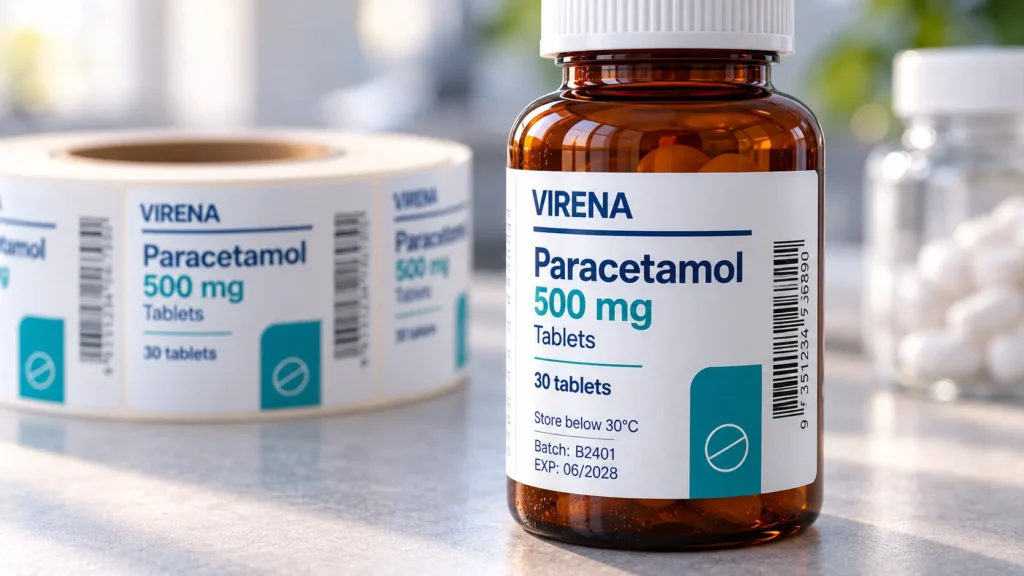
A product label on a medicine bottle or supplement jar must remain attached and readable through normal storage and handling. The container material, curve and possible moisture exposure affect the label material and adhesive.
Measure the usable label area rather than the full circumference of the bottle. Leave space for the approved wording, batch and date details where applicable, and any barcode that must scan.
For machine application, give the printer the applicator’s roll direction and core size. For hand application, check that staff can place the label consistently.
Void Stickers for Bottles and Boxes
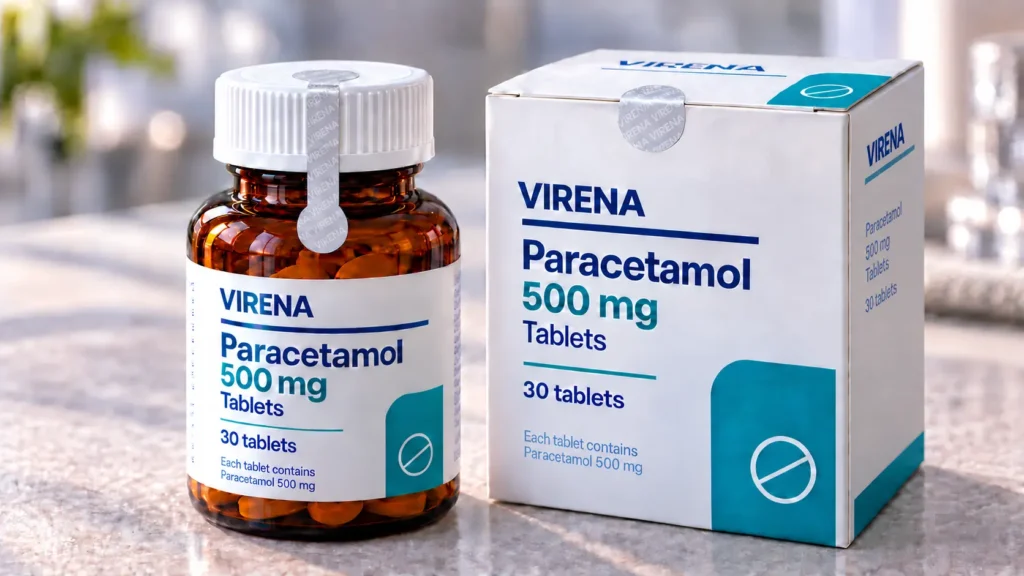
A void sticker is intended to show visible evidence when a selected closure is opened. On a carton, it may cross an opening flap; on a bottle, it may cross the cap and container.
A breakable PVC sticker is designed to break on removal and documented for controlled, dry conditions, while a hologram genuine sticker adds a security design and strong adhesion. Check whether another flap could open without disturbing the sticker. Define which opening the seal must cover.
How Are Void Stickers and Anti-Counterfeit Stickers Different?
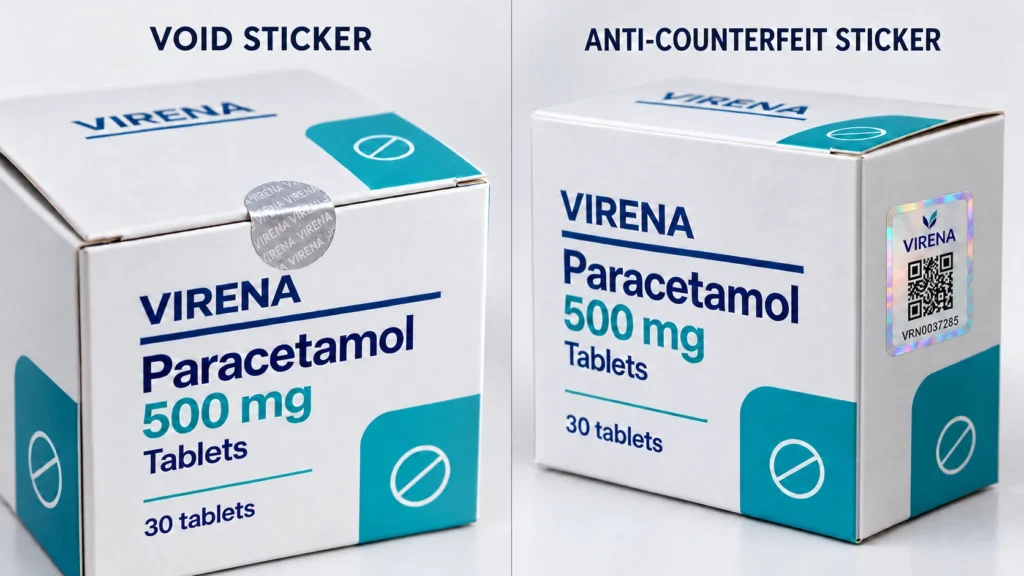
A void sticker shows possible interference with an opening. An anti-counterfeit sticker helps people check product origin or authenticity. A hologram genuine sticker may support both aims when its construction and placement provide visible opening evidence, but a holographic appearance alone does not establish that function.
For registered products subject to Malaysia’s official security-label requirement, a custom commercial seal is not a substitute for the authorised device. NPRA’s guidance explains the requirement and placement; have your regulatory team confirm what applies to your product.
How Do You Choose Materials for Storage and Handling?
Check how the components perform together during storage and handling. A packaging box must support the filled weight; pouches must suit filling; labels must remain attached and readable.
For example, a dry bottle and a chilled bottle may need different labels. A carton can also behave differently once its product and insert are inside. Assess samples on a filled pack under realistic conditions.
Record the approved size, material and appearance for repeat orders. If a pack has several components, check the complete set: a label may rub against an insert, or a filled pouch may press against its box.
What Must Be Checked in the Artwork Before Printing?
Artwork must match the approved product and the component on which it appears. A box, pouch and label can share branding, but their print areas and information needs differ.
Approved Product Information and Required Marks
Check the product name, strength or variant where relevant, pack size, claims, instructions and any registration or security-label requirements that apply. Keep required text legible and clear of folds, seals and opening stickers.
For registered medicines, use the applicable current NPRA labelling guidance with your regulatory team. The information required on an outer carton can differ from that, and other healthcare product categories may follow different requirements.
Batch Details, Expiry Dates, Barcodes and Product Variants
Reserve an appropriate area for batch and date details if these will be added during or after packing. Confirm how they will be printed so the information stays readable on the chosen material. If a barcode is used, check its size, contrast and position on a physical proof.
What Should You Prepare for a Quotation?
A useful quotation starts with the full component list, even if you will order the parts in stages. Prepare:
The product category, contents and intended pack arrangement.
Filled product dimensions, weight and storage conditions.
Required box, pouch, sachet and label sizes, or samples to measure.
The filling or label-application method, where relevant.
Approved artwork status and quantity for each design or variant.
Your required delivery date and location.
Ask for a specification and schedule for each component. Share the date your packing team needs the complete set, since boxes, flexible packs and labels may have different production times.
Planning printed packaging for a healthcare or pharmaceutical product? Contact EAN Label with your product samples, component list, approved artwork status, quantities and delivery date. The team can discuss boxes, flexible packaging and labels together, then provide a project-specific quotation and fast-turnaround schedule.
Frequently Asked Questions
Contact Us
Want to know the price or need us to recommend the best solution for you? Just fill in the simple form below and we’ll assist you right away.
Enquiry Form
Request a Quote?
Share your requirements and connect with our expert custom packaging manufacturer. Contact EAN Label today!
Connect with us!