Sauce Sachet Packaging for Food Brands: How to Plan Single-Serve Packs
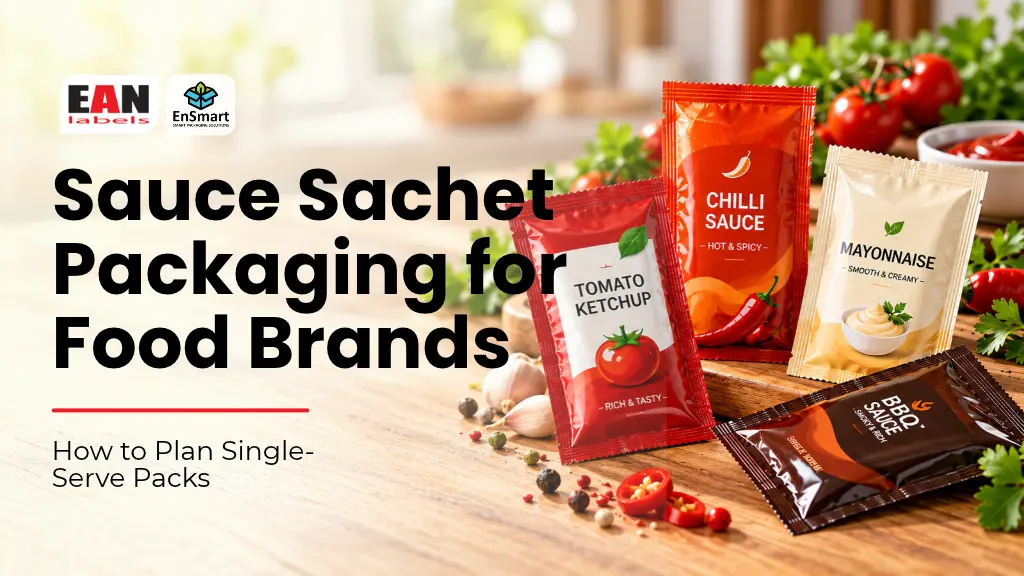
A good sauce sachet packaging starts with the sauce itself: how much a customer needs, how it is filled, and how the finished pack will be stored and opened. Confirm those requirements before choosing a film or approving artwork. A proposed sachet works in practice.
This guide is for food brands and manufacturers planning single-serve sauce packs for takeaway meals, food service, meal kits or retail multipacks.
Which Sauces Work Well in Single-Serve Sachets?
Many sauces can be considered for single-serve sachets, including chilli sauce, ketchup, dressings and thicker pastes. The question is whether the specific sauce and filling process suit the proposed pack. A smooth, runny sauce may flow into a small opening easily; a thick sauce or one containing pieces may need different filling and dispensing arrangements.
Tell your packaging and filling partners about the sauce’s thickness, particles, oil content, acidity and intended storage conditions. If the sauce is filled hot or undergoes further heat treatment, say so at the start. A 3-side seal is one flat format to discuss, depending on the sauce and filling process
How Do You Choose the Right Portion Size?
Choose a portion that matches one use of the sauce, then check whether the proposed sachet can hold and dispense it cleanly. A single serving is not the same size for every meal or sales channel.
Match the Portion to How Customers Use the Sauce
A takeaway meal may need one convenient serving, while a meal kit may need enough sauce for a cooking step. A food service buyer may also need consistent portions across many outlets. Start with the amount your customers actually use, rather than selecting a sachet size from a photograph.
If you sell more than one meal size or sauce variety, check whether each needs the same portion. One common size can simplify a range, but it should not leave customers short of sauce or create unnecessary waste.
Check the Sachet Size and Filling Requirements
The sachet needs room for the sauce, the sealed edges and an opening where customers can grip on. The sealed edges take up space, so the usable filling area is smaller than the sachet’s overall size. Sauce thickness and the filler’s equipment also affect how accurately a chosen portion can be packed.
Share your target portion with the filling partner and ask for a proposed finished width and height. Confirm the sealing area and any required space above the fill before the print layout is finalised.
What Should You Consider When Choosing Sachet Material?
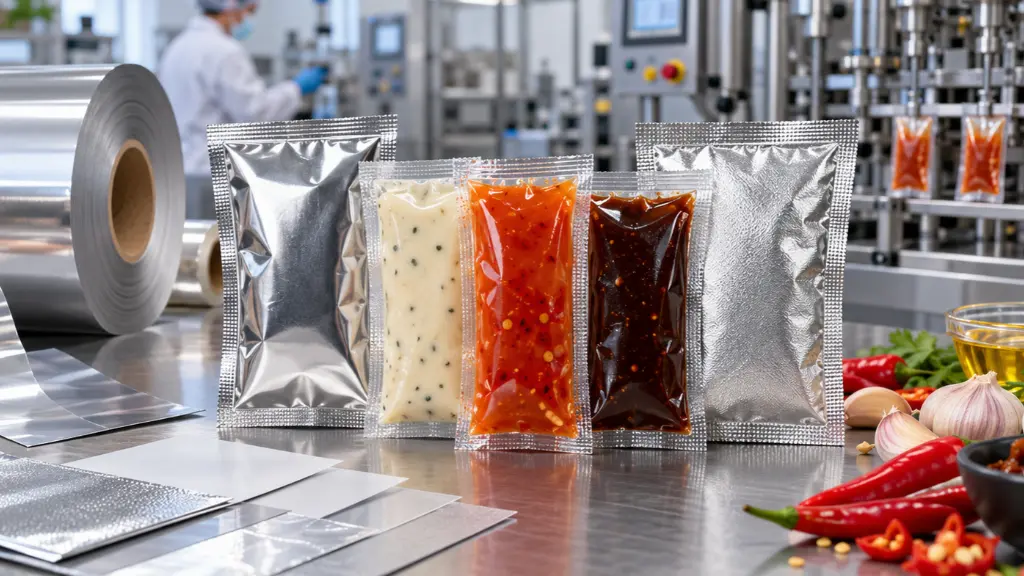
Choose a material specification for the actual sauce, process and storage period, not by a film name alone. The Malaysian Ministry of Health explains its food-grade certification guidance for food-contact material; do not assume every printed film carries that certification.
Metalised-film and aluminium-foil laminates are two options to discuss for sauce sachets. A metalised film can help limit exposure to oxygen, moisture and light; aluminium foil may be considered when the sauce needs stronger protection. Ask the supplier to confirm the complete film structure, food-contact suitability and seal performance for your sauce, filling process and storage conditions.
Sauce Ingredients and Packaging Compatibility
An oily dressing, an acidic chilli sauce and a paste containing pieces do not necessarily place the same demands on a pack. Share the recipe characteristics that matter to packaging, together with any filling or heating conditions.
Do not select a laminate simply because it worked for another flavour. If a recipe changes, check whether the original packaging specification still applies.
Storage Conditions and Shelf Life
State whether the filled sachets will be stored chilled or at ambient temperature, and how they will be handled in distribution. Also tell the supplier if the sauce will be hot-filled or exposed to a further heat process. A film and seal suitable for one process may need a different specification for another.
Set the shelf-life target with your food-safety team. The packaging supplier can help assess material and sealing options, but the finished product’s shelf life must be validated for the real recipe and process.
Pre-Formed Sachets or Printed Roll Form: Which Does Your Filling Process Need?
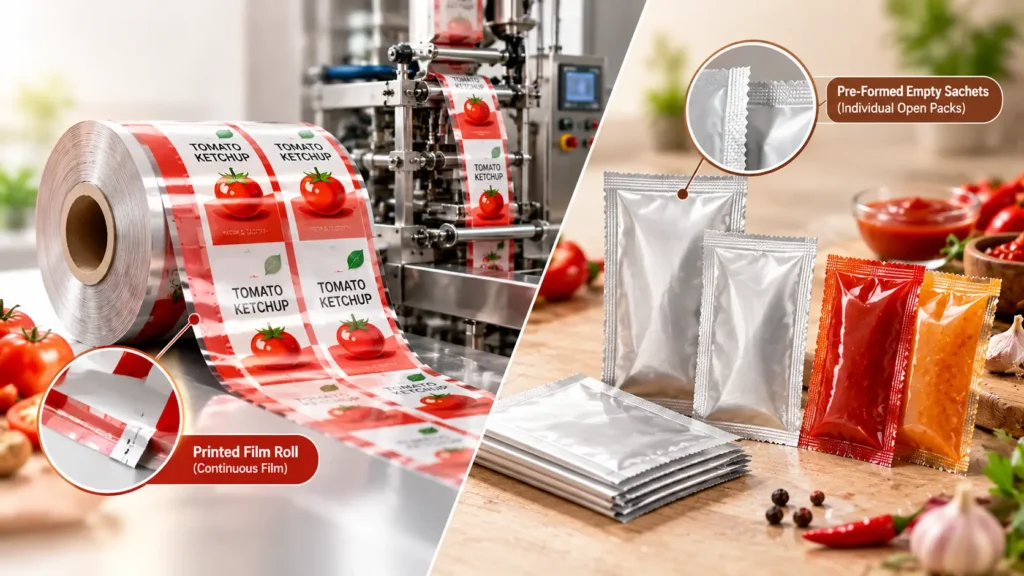
Start by asking who will fill the sauce and what their line can accept. Printed roll form is supplied as a continuous film; a compatible machine forms, fills and seals the sachets. A pre-formed sachet is an individual empty pack that a suitable filling operation fills and seals later. These are different supply formats, so they should not be ordered interchangeably.
| Supply Format | What the Filling Partner Receives | What to Confirm |
|---|---|---|
| Printed roll form | A printed film roll | Machine compatibility, roll dimensions, print repeat and sealing requirements |
| Pre-formed empty sachets | Individual open packs | Whether the filler accepts them, fill opening, final seal and supply availability |
If your filling partner uses a form-fill-seal machine, request its film specification before asking for sachet roll printing. Do not assume the printer also fills the sauce; identify the filling partner and production hand-off in the quotation request.
How Can You Make Sauce Sachets Easy to Open and Use?
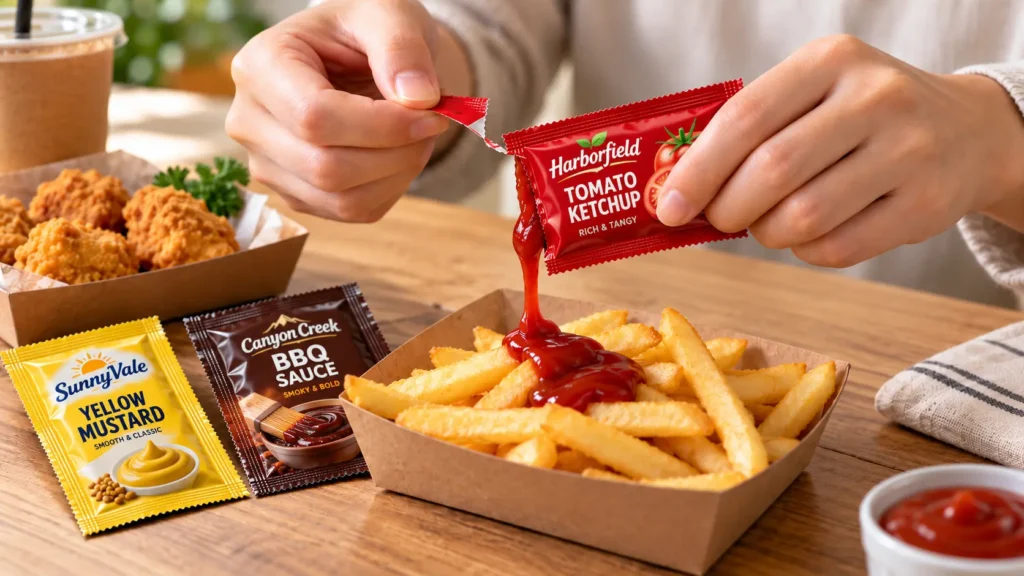
A customer should be able to find the opening, tear the pack and dispense the sauce without an awkward squeeze or a sudden spill. The right opening depends partly on sauce thickness and the way the sachet will be used. Someone opening a sachet beside a takeaway meal has different handling needs from a kitchen using many packs during service.
Discuss the tear position and whether a notch or other opening feature is available for the chosen format. Keep enough clear space around the opening for a firm grip, and avoid placing important text where it may be torn away. Check a filled sample with the intended users; an attractive flat design cannot show how the sauce will come out.
What Should Appear on Your Sachet Design?
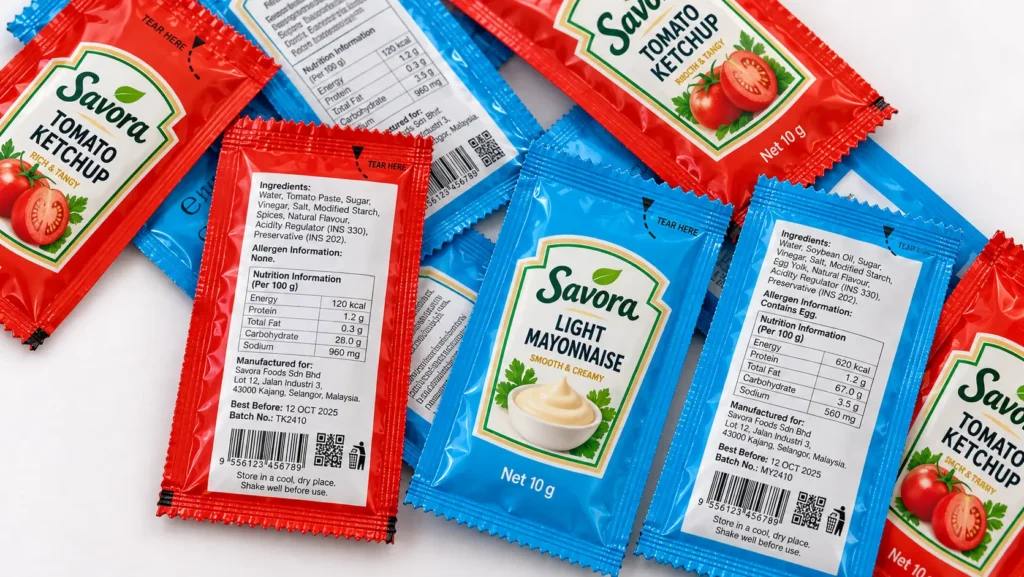
The small print area needs a clear order of information: let customers recognise the brand and sauce first, then find the product details that apply to the pack. Decide what must be printed on the individual sachet and what can appear on an outer multipack, without assuming the outer pack replaces required information.
Malaysia’s Food Regulations 1985 include food labelling requirements. Have your responsible product or regulatory team approve the wording and any claims for your sauce and sales format before print approval.
Product Information and Readability
Provide the sauce name, variant and approved product information at the intended print size. Where applicable, plan space for ingredients, allergen information, net content, date or batch details, and a barcode or code area. Which details belong on the sachet depends on the product and how it is sold.
Check that text remains readable and that the seal and tear areas do not cover the design. If the sachet is too small for the approved information, revisit the dimensions or pack arrangement rather than shrinking every line.
Different Flavours and Product Variants
Related sauces should look like one range while remaining easy to tell apart. Use a consistent brand layout, then make the flavour name and distinguishing colour or image clear. This matters for a multipack or a kitchen handling several similar-looking sachets.
Name each artwork file clearly and provide the required quantity per flavour or design. Check every proof against the approved product details. A change in recipe, ingredient statement or variant name should trigger a new artwork check, even if the main design stays the same.
What Should You Check in a Filled Sample?
A filled sample shows how the complete sachet behaves; an artwork proof shows only the print. Ask your filling partner for samples made with the actual sauce and proposed packaging specification. Check the fill amount, seal appearance, leaks, opening and how neatly the sauce dispenses.
Handle and store the samples in ways that reflect the planned supply chain. If the sachets will travel inside meal kits or cartons, check them in that setting too. Record any leaks or opening problems and resolve them before approving a larger order. A visual check is useful, but it does not replace the food brand’s required shelf-life and safety validation.
What Information Should You Prepare for a Quotation?
A useful quote starts with a clear description of the product and filling process. Prepare the following information before contacting a printer:
- Sauce type and relevant characteristics, such as thickness, particles, oil content or acidity.
- Target fill weight or volume, proposed sachet size and intended use.
- Storage conditions, shelf-life target and any hot-fill or heat-process requirements.
- Filling partner or machine details, and whether that partner needs printed roll form or individual packs.
- Number of flavours or designs, with the quantity required for each.
- Artwork status, any approved product wording, delivery location and required delivery date.
If your quality team needs specific food-contact documentation, mention it to the supplier to discuss a suitable print and material specification and give you a project-specific quotation and schedule.
Note: Explore our sachet packaging guide for a closer look at common formats, materials and uses.
Planning sauce sachet packaging for an existing range or a new flavour? Contact EAN Label with your sauce details, target portion, filling requirements, quantity per design and delivery date. Our team can discuss printed sachet roll form, prepare a project-specific quotation and confirm the production timeline.
Frequently Asked Questions
Contact Us
Want to know the price or need us to recommend the best solution for you? Just fill in the simple form below and we’ll assist you right away.
Enquiry Form
Request a Quote?
Share your requirements and connect with our expert custom packaging manufacturer. Contact EAN Label today!
Connect with us!