
Barcode Label Printing Malaysia: Material, Adhesives and Printing Requirements
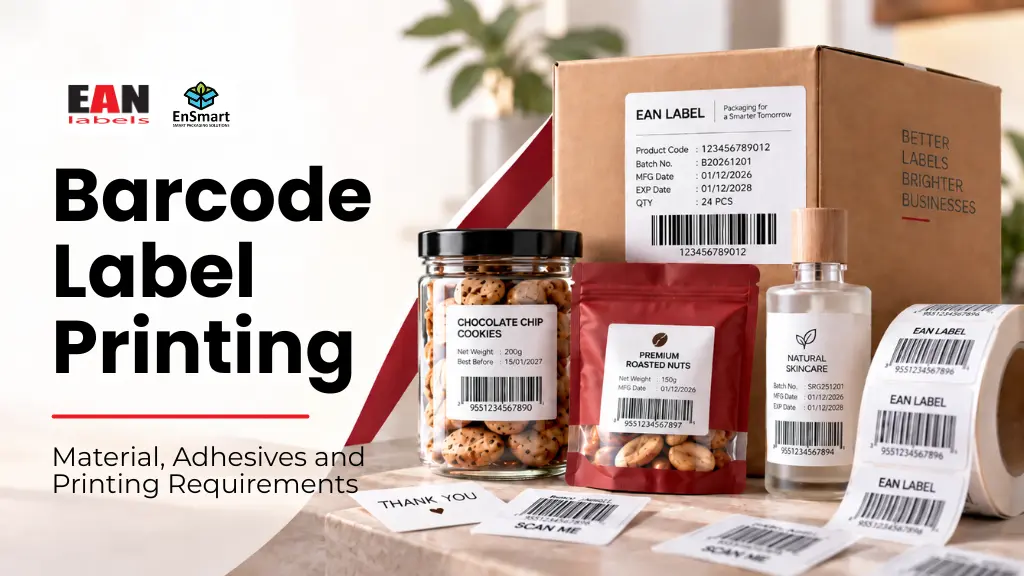
Barcode label printing Malaysia starts with the application, not the barcode format alone. The label material, adhesive and printing method should match the surface, moisture, temperature, handling, scan requirements and expected label life. EAN Label can review these details and recommend a suitable label specification before production.
What Is Barcode Label Printing?
Barcode label printing produces labels that encode product, stock, shipment or product tracking information for scanning. A label may contain a barcode, human-readable text, a product name, batch number, expiry date or serial number.
Some barcode labels are pre-printed with fixed artwork and data. Others are supplied as blank or partly printed labels for later thermal printing. The right choice depends on who will print the variable information, what system generates the data and how long the label must remain readable.
Scan performance depends on the complete label system. Barcode size, contrast, clear spaces, print quality, placement, surface reflection and scanner compatibility all matter. Before approving a full run, scan a physical sample on the actual product or carton.
How Are Barcode Labels Used Across Different Industries?
Barcode labels help businesses identify, track and move products through different stages of a supply chain. The label specification should reflect how often it is scanned and what conditions it will face.
Logistics and Manufacturing
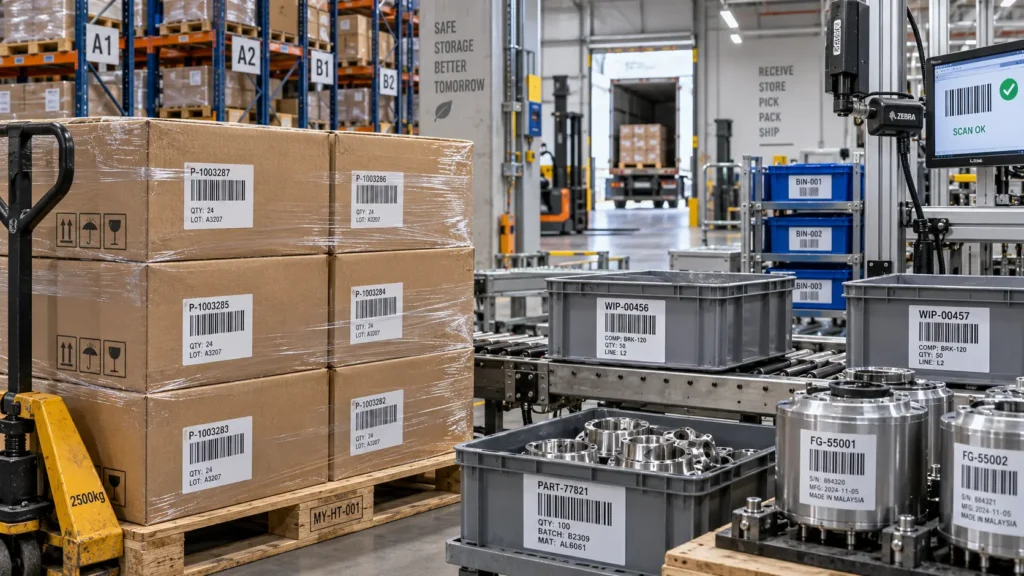
Logistics companies and manufacturers use barcode labels for cartons, pallets, storage locations, components, work-in-progress items and finished goods. Labels may face frequent scanning, friction, dust and temperature changes, so choose a material and adhesive that can remain readable and attached during storage and transport.
Electrical and Electronics
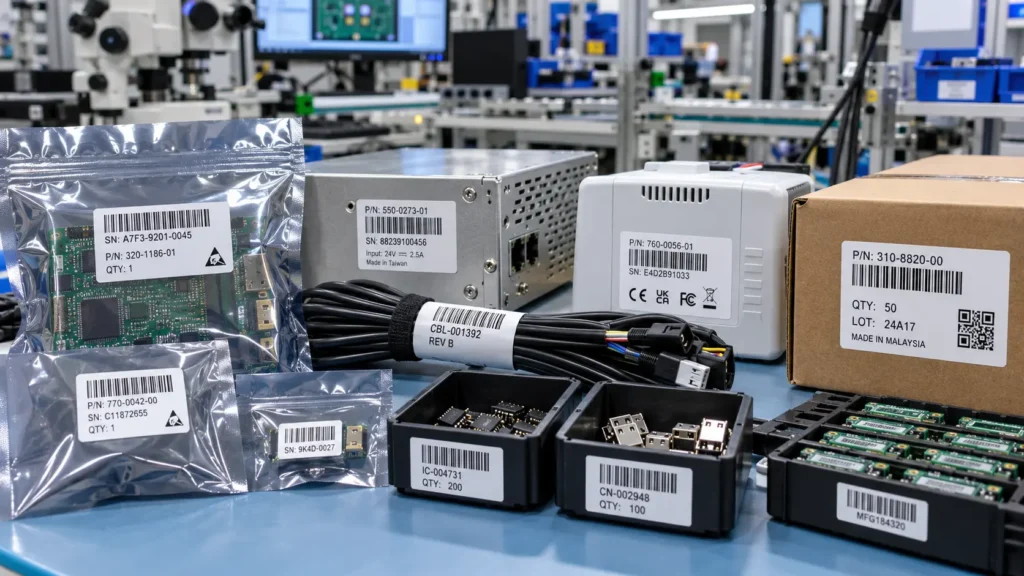
Electrical and electronics businesses use barcode labels for components, cables, equipment, serial numbers and product packaging. Small labels may require precise barcode sizing and clear printing, while labels applied to plastic, metal or textured surfaces may need a suitable adhesive. Test the label on the actual product before production.
Food and Beverage
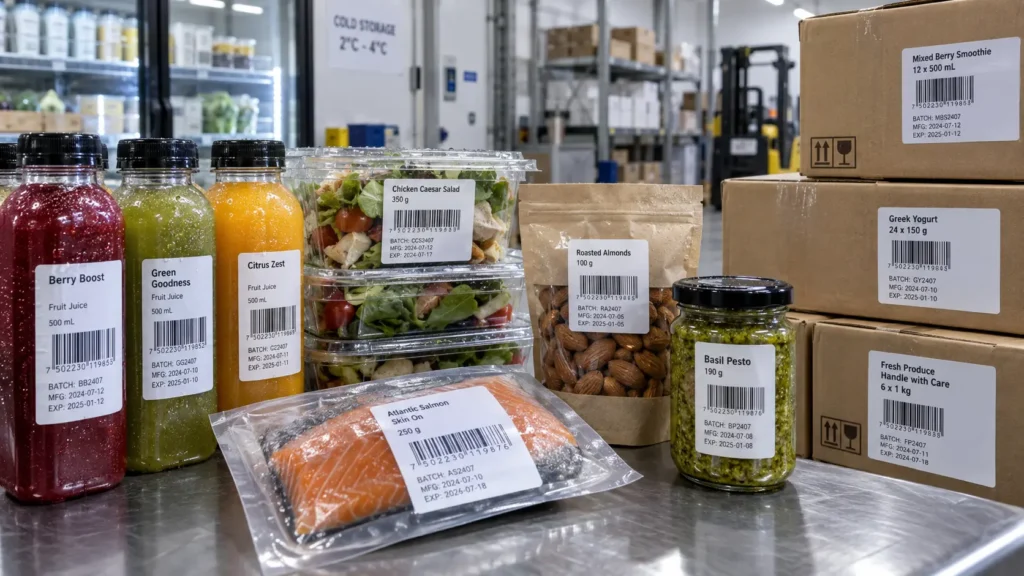
Food and beverage businesses use barcode labels for product identification, cartons, batches, inventory and distribution. Labels may be exposed to moisture, refrigeration, oil or frequent handling, so waterproof or synthetic materials may be more suitable for some applications. Confirm the required label life, surface and storage conditions before selecting the material.
Replacement Labels for Imported Products
Imported products may need replacement or over-labels when the original packaging uses another language or does not include the information required for sale in Malaysia. The new label can include translated product details, importer information, barcode, batch number or expiry date. Confirm the required wording and regulatory details before printing, and test the label’s adhesion and barcode scanning on the actual packaging.
How to Choose the Right Barcode Label Material?
The correct barcode label material depends on the surface, environment, print method and required label life. A paper-based label may suit a dry, short-term application, while a film-based label may be more suitable when moisture, oil or abrasion is expected.
| Material | Suitable Use | What to Confirm |
|---|---|---|
| Paper-based label | Dry cartons, shelves, stock and short-term identification | Exposure to moisture, rubbing and storage duration |
| Film-based label | Refrigerated, humid, oily or frequently handled products | Film type, print method, adhesive and chemical exposure |
| Direct thermal label | Short-term shipping, receiving and internal tracking | Heat, sunlight, abrasion and image-retention period |
| Thermal transfer label | Longer-life labels and applications needing a ribbon | Ribbon type, material, printhead settings and durability |
Material names alone do not guarantee performance. Paper and film labels can both be supplied with permanent or removable adhesive, depending on the application. The label material, adhesive, ink or ribbon and application conditions work together.
Paper-based Label vs Film-based Label
A paper-based label can be a practical option for dry applications where the label has a limited service life. Waterproof or synthetic labels can be considered where condensation, splashes, oil, abrasion or repeated handling may damage paper.
A film-based label does not automatically mean resistant to every chemical, temperature or outdoor condition. Confirm the actual exposure and test the printed barcode, adhesive and surface together.
Direct Thermal Label vs Thermal Transfer Label
Direct thermal labels react to heat from the printer’s printhead and do not use a ribbon. They can suit short-term, controlled applications such as shipping or internal movement, but heat, sunlight, chemicals and abrasion may affect the image over time.
Thermal transfer labels use a ribbon to transfer the image onto paper or synthetic label material. They can be considered when the label needs a longer-lasting image or greater resistance to handling, subject to the selected ribbon and material.
Neither method is automatically best for every barcode. Tell the supplier the required label life, storage conditions and printer model so the material and ribbon can be matched correctly.
How to Choose the Right Label Adhesive?
The adhesive controls how well a barcode label sticks during application and use. Consider initial stickiness, permanent adhesion, removability, application temperature, surface texture and the time the label must remain attached.
Cardboard and Paper Surfaces
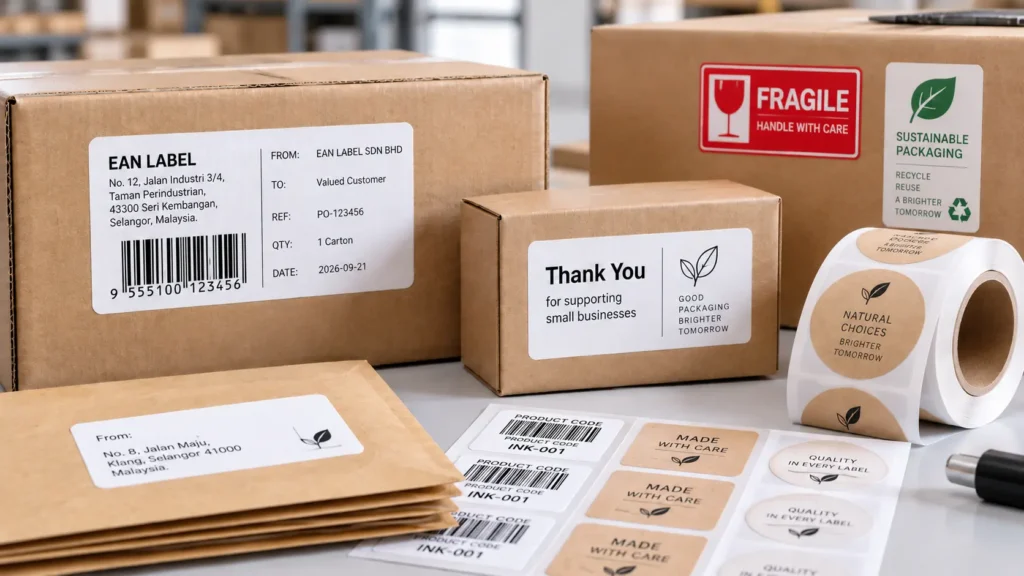
Cardboard and paper may be coated, uncoated, dusty, fibrous or affected by humidity. A label that works on a smooth carton may perform differently on recycled or corrugated material. Confirm whether the surface is clean and dry when the label is applied and test it after storage.
Plastic, Metal and Painted Surfaces
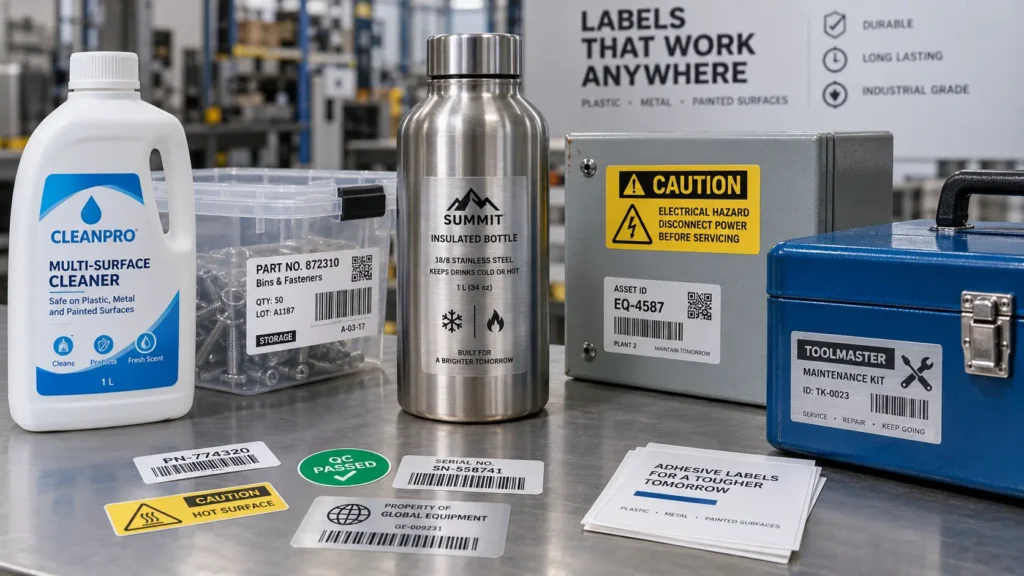
Plastic, metal and painted surfaces can have different coatings, textures and shapes. Some containers also flex or release oil during handling. Provide the exact container or a representative sample so the adhesive can be tested on the final surface.
Cold, Moist, Oily and Rough Surfaces
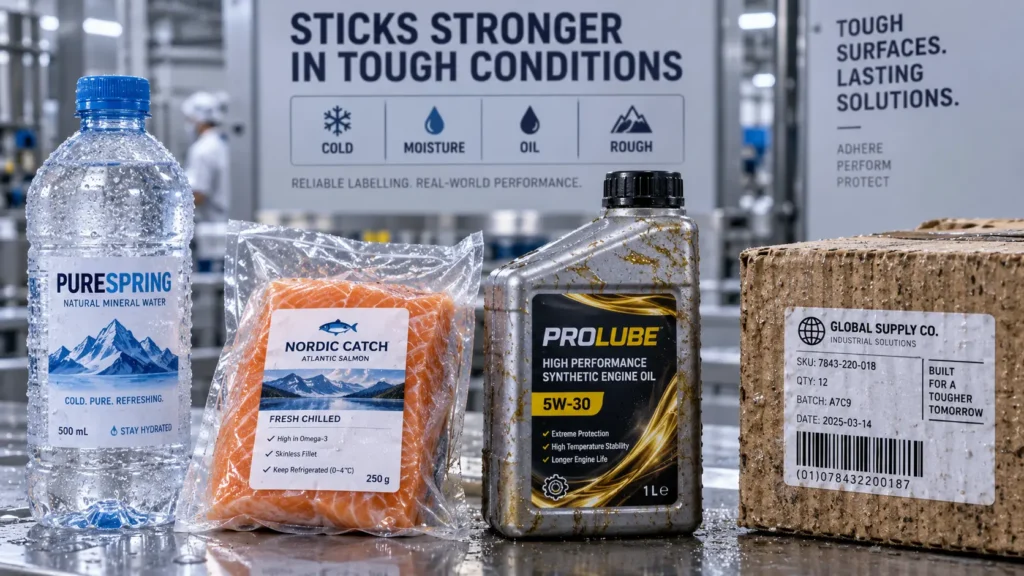
Condensation, refrigeration, oil, dust and rough surfaces can reduce adhesion. Application temperature and the time needed fo the adhesive to bond also matter; a label may stick initially but lift later after storage or movement.
Ask EAN Label to check the material and adhesive against your actual surface and conditions. Record the application temperature, storage environment and handling process when evaluating the sample.
Barcode Data and Printing Requirements
Barcode artwork must be prepared for both scanning and production. The supplier needs the correct data, dimensions, clearances and variable-information rules before confirming a quotation.
Barcode Size, Type and Data Structure
The barcode type and size depend on the data, scanner, reading distance, label dimensions and business system. Confirm the required barcode type and numbering rules with the organisation or software system generating the barcode. Use GS1 Malaysia as a reference for GS1 identification and barcode standards.
Leave enough clear space around the barcode and maintain strong contrast between the bars and background. Consider human-readable text, orientation, label curvature and the available print area. Do not assume that enlarging a barcode will solve every scanning problem; verify a physical sample with the intended scanner.
Serial Numbers and Variable Data
Barcode labels can include serial numbers, batch codes, expiry dates or other variable information when the data and numbering rules are approved. Confirm the file format, number range, duplicate control, revision process and whether EAN Label or your team will print the variable data.
Before approving a full production run, scan a printed sample using the scanner or system used in your operation. Check the barcode from the intended distance and angle, and confirm that the human-readable information matches the encoded data.
What Information Is Needed for a Barcode Label Quotation?
Provide the following information so the supplier can recommend a practical specification:
- Barcode type or sample data
- Label width, height, shape and corner radius
- Product, carton or surface to be labelled
- Paper or film preference and waterproof requirement
- Adhesive requirement and application temperature
- Fixed artwork and variable-data requirements
- Quantity, roll or sheet format, core size and winding direction where relevant
- Scan distance, environment and expected label life
A product sample, existing label, barcode data file and application photographs can make the recommendation more accurate. If you are unsure about the material, request a sample before approving the full production run.
Why Choose EAN Label for Barcode Label Printing?
EAN Label provides sticker and label printing for businesses that need help coordinating label material, adhesive, printing and variable-data requirements. The team can review the product surface and intended use before recommending a label option.
EAN Label is an ISO 9001:2015-certified Malaysian packaging manufacturer offering labels, flexible packaging and boxes from one supplier. Its fast turnaround positioning is supported by recognition in the 2022 Malaysia Book of Records.
Need barcode labels for products, cartons or warehouse tracking? Send EAN Label your barcode sample, label size, application surface, material preference, quantity and target date. The team can help you review the material and adhesive options and prepare a quotation. WhatsApp us today to discuss your barcode label requirements.
Frequently Asked Questions
Contact Us
Want to know the price or need us to recommend the best solution for you? Just fill in the simple form below and we’ll assist you right away.
Enquiry Form
Request a Quote?
Share your requirements and connect with our expert custom packaging manufacturer. Contact EAN Label today!
Connect with us!


