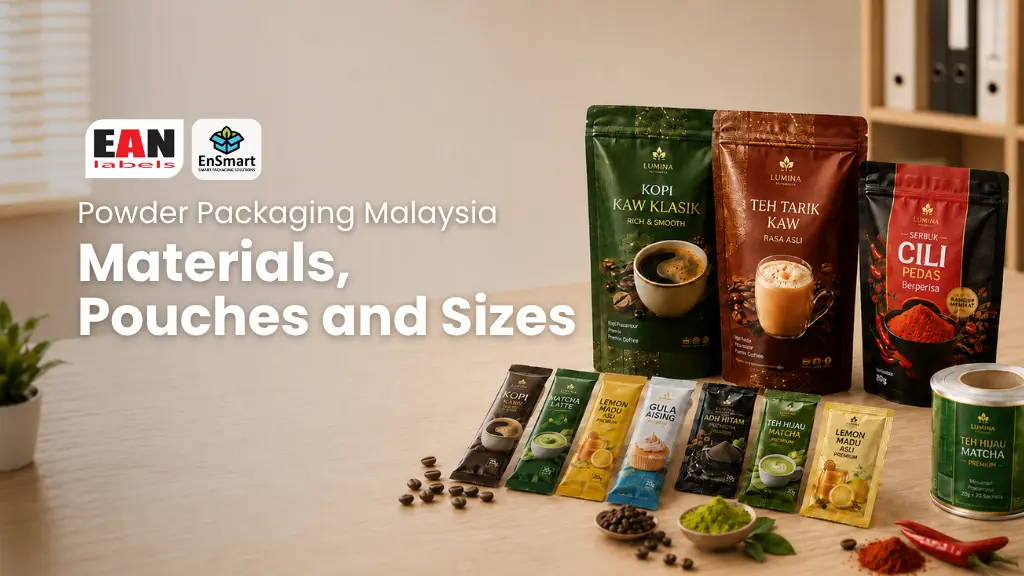
Powder may look simple to pack, but the wrong packaging can cause real problems: powder clumping from moisture, coffee or spices losing their aroma, seals that fail, or a pouch that looks oddly oversized for what’s inside. Some powders are also sensitive to oxygen or light.
The right powder packaging in Malaysia depends on the product itself, the protection it needs, how it’s filled, how it’s stored and its actual volume. A good pouch protects the powder, works smoothly during packing, and looks right on the shelf or in a box. This guide helps Malaysian SMEs compare materials, formats and sizes before requesting a quotation.
What Can Happen When the Wrong Packaging Is Used for Powder Products?
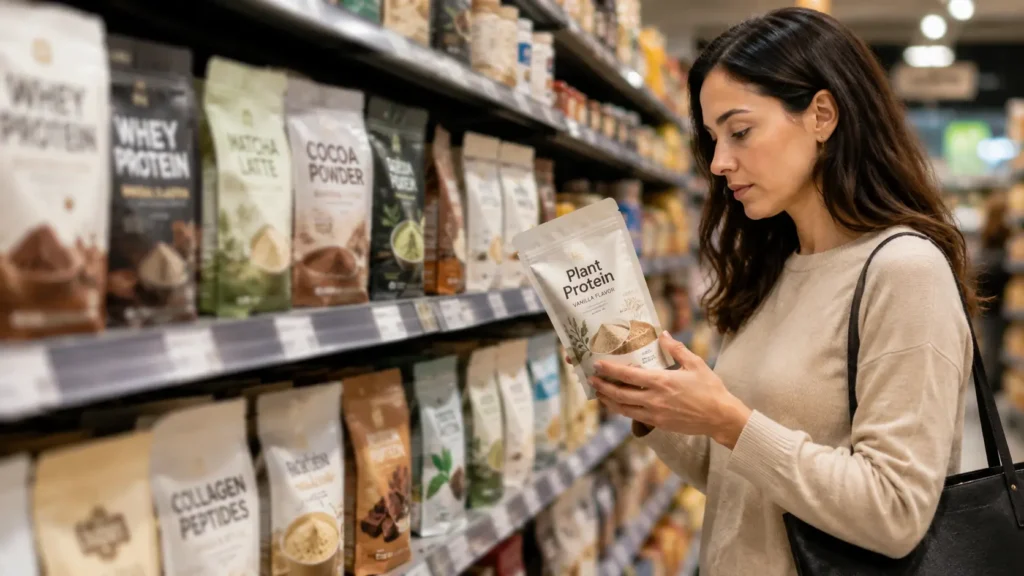
The wrong packaging creates problems for both the product and the customer. Moisture can cause clumping, coffee or spices can lose their aroma, and oxygen or light can affect sensitive fats, colours or nutrients.
Fine powder can also get into the sealing area, weakening seals or causing leaks. Customers may struggle with a pouch that’s hard to close, awkward to pour from, or much bigger than the product inside — any of which can make a product look less reliable on shelf. The exact risks depend on the recipe, how it’s filled, how it’s stored and how long it needs to last.
Why Do Powder Products Need the Right Packaging Protection?
Good packaging protection keeps outside conditions from affecting the powder and keeps the pack sealed shut. Five things matter most:
- Moisture barrier: how well the material keeps water vapour out.
- Oxygen barrier: how well the material keeps oxygen out.
- Light barrier: how much light the packaging blocks.
- Aroma protection: how well the pack keeps aroma in and outside smells out.
- Seal integrity: whether the seals stay intact through filling, transport and storage.
No single material delivers all five automatically. Barrier performance comes from the full pack structure, not just whether it’s PE plastic, metalised or aluminium foil. If your brand promises a specific shelf life, confirm with your supplier that the actual pack can support it.
Different Powder Products Have Different Packaging Needs
Different powders behave differently — coffee, protein powder and spices don’t share the same risks. Formulation, aroma, density, how it’s used and how it’s stored all play a part. The table below is a starting point, not a final specification.
| Powder Product | Main Packaging Concern | Common Packaging Direction |
|---|---|---|
| Coffee powder | Aroma, moisture and oxygen | Consider an opaque barrier structure and resealing for multi-use packs |
| Milk or beverage powder | Moisture; possible oxidation | Match moisture and oxygen protection to the recipe and shelf life |
| Protein powder | Moisture, volume and repeated opening | Resealable retail pouch or portion pack |
| Seasoning or spice powder | Aroma, moisture and fine particles | Barrier material plus a sealing trial with the actual powder |
| Premix powder | Portion accuracy and moisture | Sachet / Roll Form for portions; pouch for retail or refill use |
| Supplement powder | Ingredient sensitivity and serving format | Review the formulation and intended use before choosing a structure |
| Cocoa powder | Aroma, moisture and possible light exposure | Compare PE plastic, metalised and aluminium foil options against shelf-life needs |
| Pet supplement powder | Repeated use and dosing convenience | Resealable pouch or measured portion pack |
Coffee, protein and seasoning powders should be assessed separately, even at the same target weight.
Why Does Food Contact Safety Matter for Food Powder Packaging?
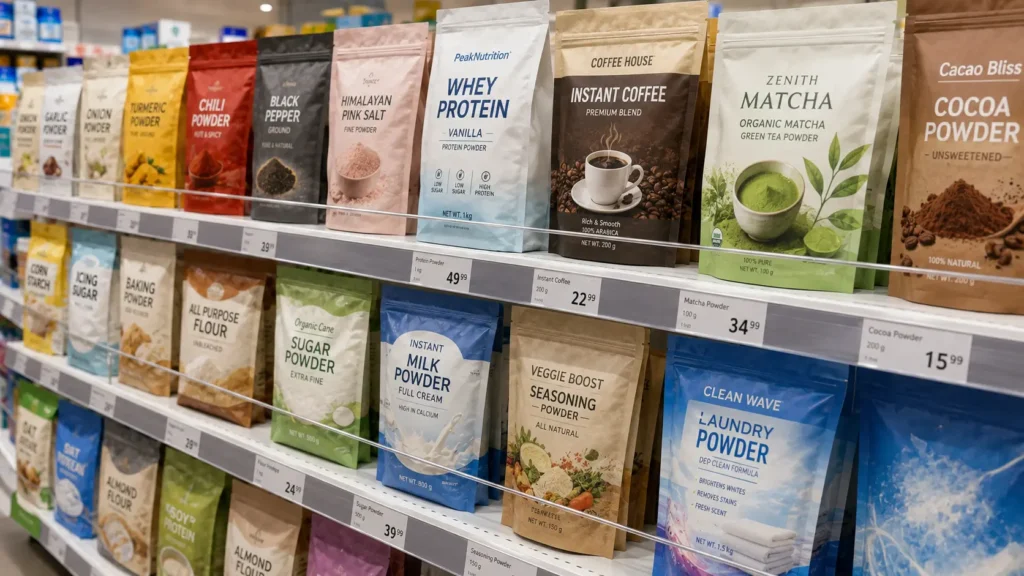
Food-contact packaging is packaging meant to touch food directly. The material needs to be suitable for this, because small amounts of substances can sometimes transfer from the packaging into the food — this is called migration.
In Malaysia this is governed by the Ministry of Health’s Food Regulations 1985. Regulation 27 prohibits packaging that yields or could yield toxic, injurious or tainting substances to food or that may contribute to the deterioration of food.
What this means in practice is simple: confirm food-contact suitability with your supplier before you approve a structure. Tell them four things — the product, the filling method, the storage conditions and the expected shelf life — then ask for written confirmation that the proposed material is suitable for direct food contact.
Not every EAN Label structure automatically suits every food powder — confirmation for your specific product is required.
What Flexible Packaging Materials Are Commonly Used for Powder Products?
PE plastic, metalised and aluminium foil are common material options for powder packaging. Each provides a different balance of product visibility and protection.
Flexible packaging may also use multiple layers, with different layers helping with printing, barrier protection and sealing.
PE Plastic Packaging
Clear PE plastic packaging lets customers see the powder inside — useful when colour or texture helps sell the product. Its main weakness is light exposure, and different PE plastic structures can vary widely in how much moisture and oxygen they keep out.
Metalised Packaging
Metalised packaging is polymer film with a very thin metal coating. It blocks visibility but usually protects better than a basic clear pack. It is often considered when more opacity and barrier protection are needed than a basic clear structure. Actual performance still depends on the full structure.
Aluminium Foil Packaging
Aluminium foil packaging uses a separate foil layer to block light and provide stronger moisture and oxygen barrier protection. It is commonly considered for powder products that need a higher level of protection, although the product inside will not be visible.
The right material should still be chosen based on the product, protection needs, shelf-life target, filling method and storage conditions.
PE Plastic vs Metalised vs Aluminium Foil Packaging
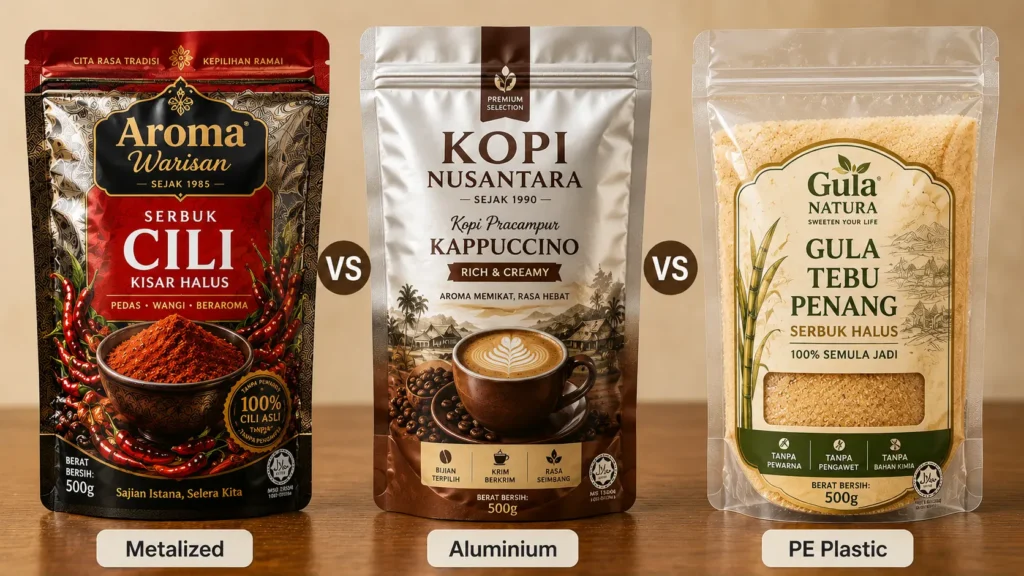
PE plastic offers product visibility, and metalised usually provides greater opacity and barrier protection, while aluminium foil is often considered when stronger barrier protection is required. Exact results still depend on the full laminate and specification.
| Feature | PE Plastic | Metalised | Aluminium Foil |
|---|---|---|---|
| Product Visibility | Usually high | Usually low or none | None through the foil area |
| Moisture Barrier | Varies widely | Often better than a basic clear structure | Often chosen for strong protection needs |
| Oxygen Barrier | Depends on the layers used | Often improved by the metal coating | Often chosen for low oxygen transmission |
| Light Barrier | Limited unless specially designed | Usually good opacity | Strong opacity through the foil area |
| Common Application | Visibility-led products | Seasoning, premixes and other dry powders | Coffee and sensitive powders |
Performance depends on the full laminate, its thickness and how it’s used. Always ask for the proposed structure and test it with your actual product before approving.
What Flexible Packaging Formats Are Commonly Used for Powder Products?
Powder products can use different flexible packaging formats depending on the product, filling method, pack size and how it will be used. Some commonly selected options include Stand-Up Pouch, 4 Side Seal, Center Seal with Gusset and Sachet / Roll Form, but other formats may also be suitable depending on the application.
1. Stand-Up Pouch
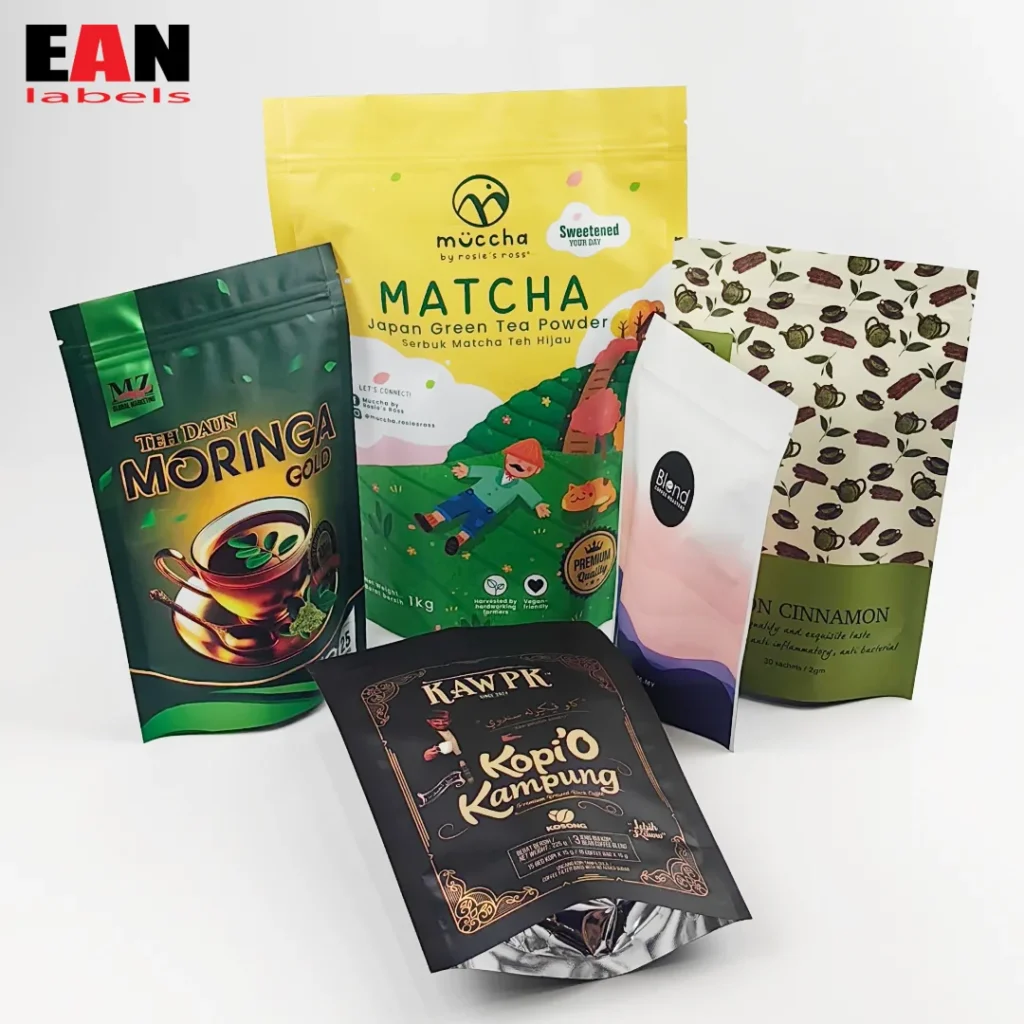
A Stand-Up Pouch has a bottom gusset so it can stand upright on shelves, and may include a zipper. It is commonly used for multi-use retail, family or refill packs for products such as coffee, protein powder, cocoa, supplements and seasoning.
2. 4 Side Seal
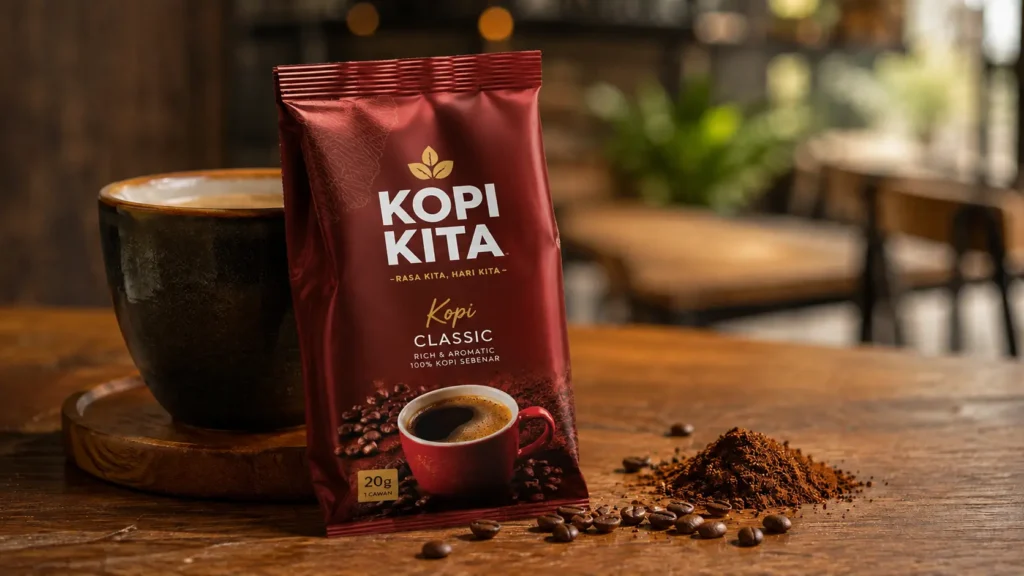
A 4 Side Seal is sealed on all four edges, creating a flat and secure pack. It can suit single-use portions, samples, premixes, seasonings and other powder products where compact packaging and portion control are important.
3. Center Seal with Gusset
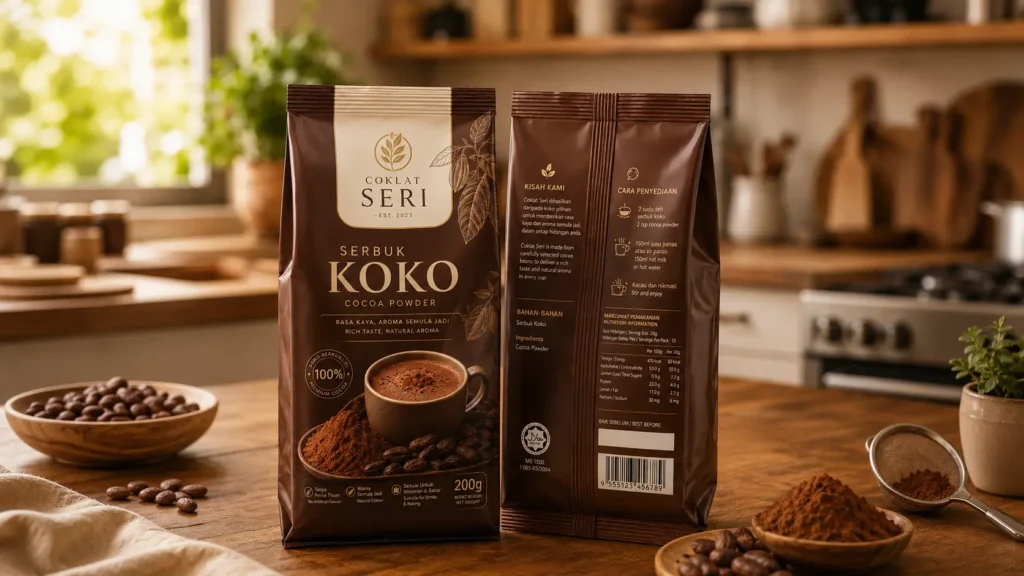
A Center Seal with Gusset has a centre back seal with side gussets that provide extra space for the product inside. It can suit beverage premixes, seasonings and other powder products that need more pack volume, depending on the filling method, product volume and pack design.
4. Sachet / Roll Form
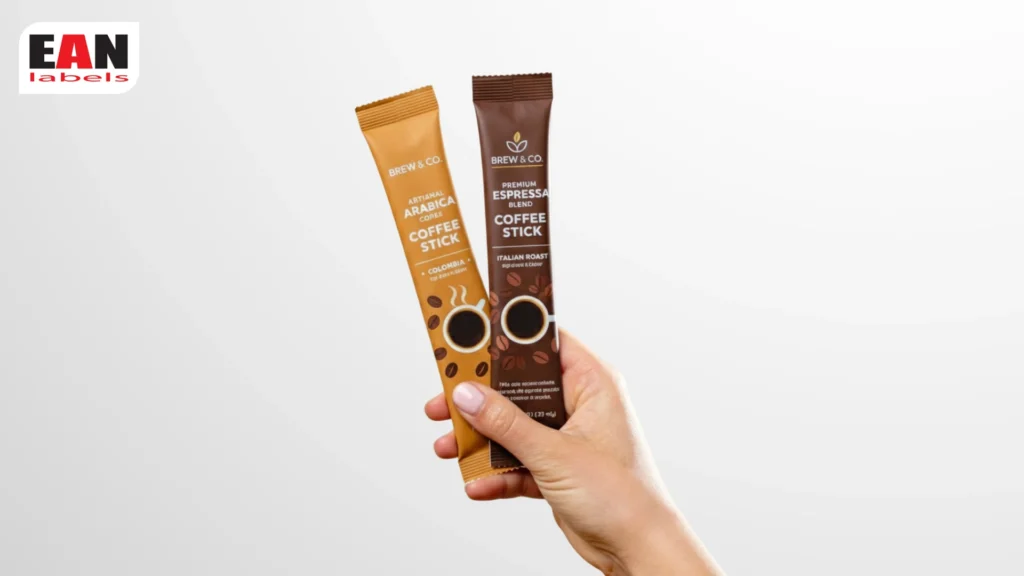
Sachet / Roll Form is commonly used for single-serving packs, samples and smaller portions of products such as premix, coffee, seasoning and supplements. The suitable specification depends on the filling machine, pouch dimensions and sealing requirements.
These are some of the commonly used flexible packaging formats for powder products. Other pouch structures or formats may also be considered based on the product, filling process, quantity and packaging requirements.
Stand-Up Pouch vs Sachet / Roll Form: Which Is More Suitable for Powder Products?
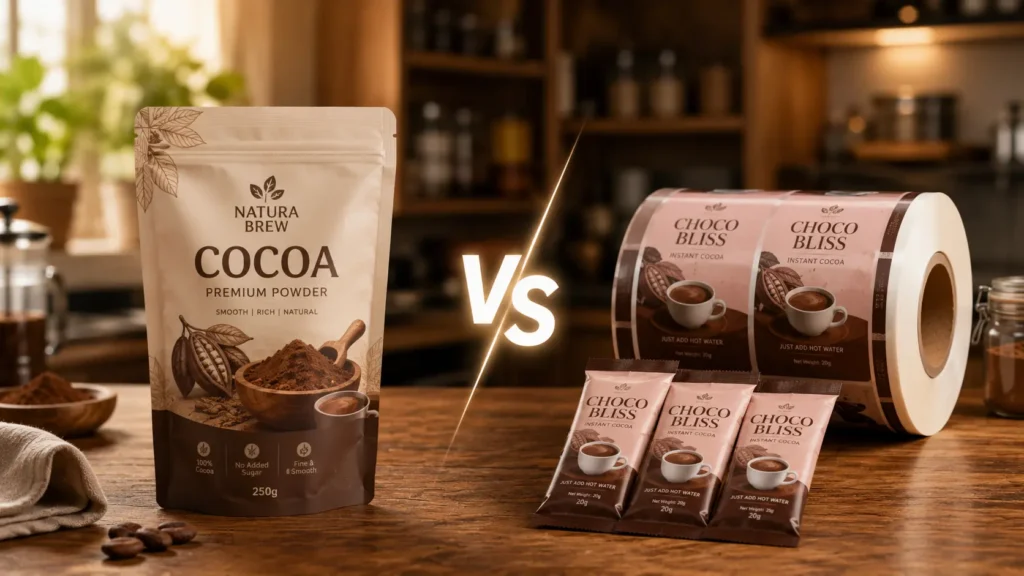
A Stand-Up Pouch usually suits a retail pack meant for repeated use, while Sachet / Roll Form usually suits smaller portions or automated packing lines. Neither is the automatic best choice for every business.
| Factor | Stand-Up Pouch | Sachet / Roll Form |
|---|---|---|
| Typical Pack Size | Retail, family or refill quantities | Samples and single portions, subject to equipment |
| Resealable Option | Zipper may be available | Usually opened once at small sizes |
| Portion Control | Customer measures from the pack | Can be a pre-measured serving |
| Shelf Presentation | Stands upright with a broad display panel | Compact units, sometimes bundled in an outer pack |
| Filling Method | Commonly a preformed pouch | Suitable for compatible automated packing machines |
| Common Applications | Protein, coffee, cocoa and refills | Premix, coffee portions, seasoning and samples |
Choose based on quantity, how customers use the product, filling method and number of SKUs — not appearance alone.
How to Choose the Right Powder Packaging Size
Choose powder packaging size based on actual product volume, not weight alone, because different powders have different densities. Two powders that both weigh 200 g can require very different pouch volumes.
Common size directions include:
- Sample Pack: trials or promotions
- Single Serving: one measured use
- Retail Pack: a standard consumer quantity
- Family Pack: frequent household or food-service use
- Refill Pack: refilling another container
Before finalising, test the actual powder in the pouch. Check the fill level, headspace, zipper or closing area, scoop access and whether powder gets near the seal. Gusset depth, seal width, artwork, machinery and carton packing can also affect the final dimensions.
Start Powder Packaging Printing with EAN Label
EAN Label helps brands turn their powder products into practical, custom printed flexible packaging — from choosing the material and pouch format to confirming the suitable size for the actual filling weight.
Depending on the product’s needs, brands can choose from PE plastic, metalised or aluminium foil packaging, together with formats such as Stand-Up Pouch, 4 Side Seal, Center Seal with Gusset and Sachet / Roll Form.
For selected flexible packaging options, MOQ starts from 100 pieces, while Roll Form starts from 500 metres. This gives SMEs more flexibility for new product launches, market testing, multiple flavours or SKUs, and repeat production.
As a one-stop packaging printing supplier in Malaysia with ISO 9001 certification, EAN Label supports brands from packaging planning to production. Its Malaysia Book of Records achievements for packaging production lead time also reflect its focus on helping businesses move to market efficiently.
Frequently Asked Questions
Contact Us
Want to know the price or need us to recommend the best solution for you? Just fill in the simple form below and we’ll assist you right away.
Enquiry Form
Request a Quote?
Share your requirements and connect with our expert custom packaging manufacturer. Contact EAN Label today!
Connect with us!