Refill Pouch Packaging in Malaysia: Is a Spout Pouch Right for Your Product?
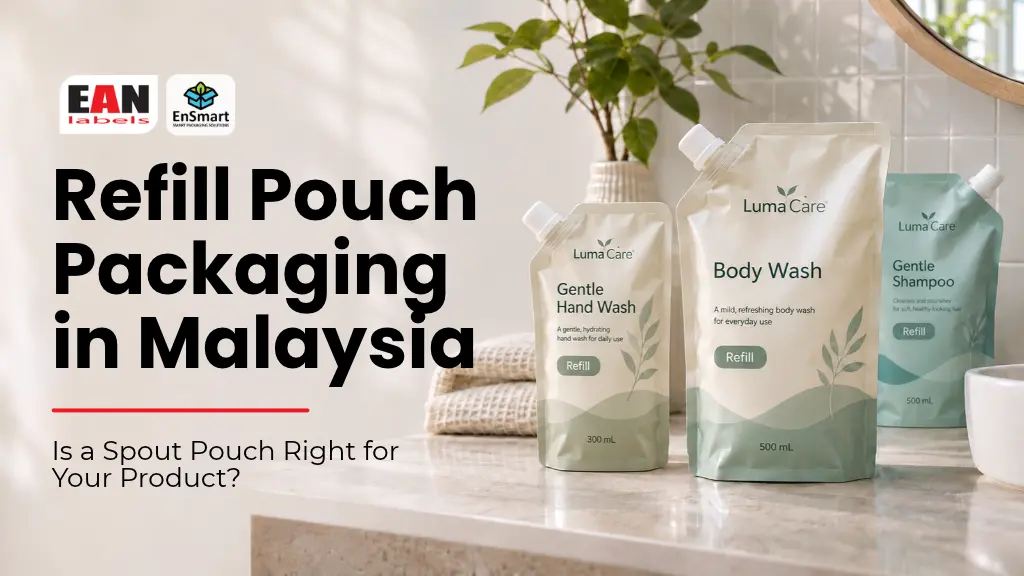
A spout pouch can suit a liquid or pourable refill when the product, pouch material, spout, cap and filling process work together. It also needs to let customers pour into their existing container without unnecessary spills. Refill pouch packaging in Malaysia should therefore be chosen around the actual formula and how people will use it, rather than the pouch’s appearance alone.
This guide helps brand, procurement and production teams compare possible uses, check the filled pouch and prepare a clear printing request. It focuses on skincare, personal care and household products, with brief examples from other categories.
Which Products Suit a Spout Pouch Refill?
Spout pouches are worth considering when a product can flow through a suitable opening and customers need to pour it in a controlled way.
| Product Group | Possible Refill Use | First Question to Check |
|---|---|---|
| Skincare and personal care | Shampoo, body wash, cleanser or a pourable lotion | Will the formula flow through the chosen spout and remain compatible with the pack? |
| Household cleaning and laundry | Liquid detergent, fabric softener or dishwashing liquid | Will the formula affect the film, spout or seals during storage? |
| Other pourable products | Selected sauces, concentrates or pet-care liquids | What product-specific contact, filling and labelling requirements apply? |
Skincare and Personal Care Products
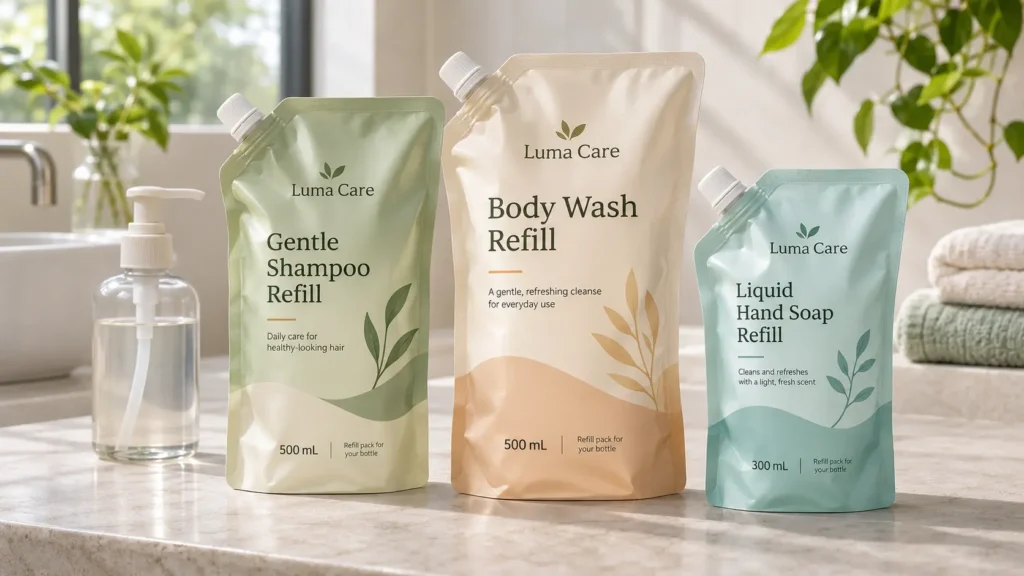
Shampoo, conditioner, body wash and liquid hand soap are familiar refill examples. A pourable facial cleanser or lotion may also be suitable. The spout can help customers transfer the product into a bottle they already use, while a cap allows the pouch to be closed if some product remains.
Do not assume every skincare product will pour cleanly. A thick cream, gel or product containing particles may need a different opening or format. Share a sample and information about product’s thickness, fragrance or oils with the packaging supplier and filling partner before settling on a pouch.
Household Cleaning and Laundry Products
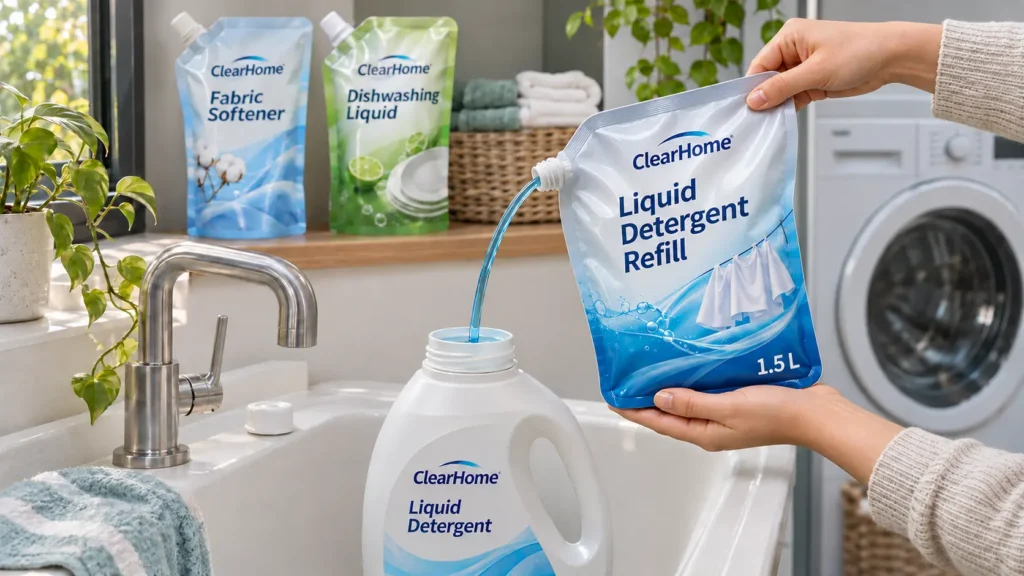
Liquid detergent, fabric softener and dishwashing liquid can be considered for spouted refills. For these products, controlled pouring matters because customers may transfer a larger quantity into a bottle or dispenser.
The product formula still needs its own compatibility review. Give the supplier the intended contents, fill amount, storage conditions and any known material restrictions. The same pouch chosen for shampoo should not automatically be used for a cleaner.
Other Pourable Products
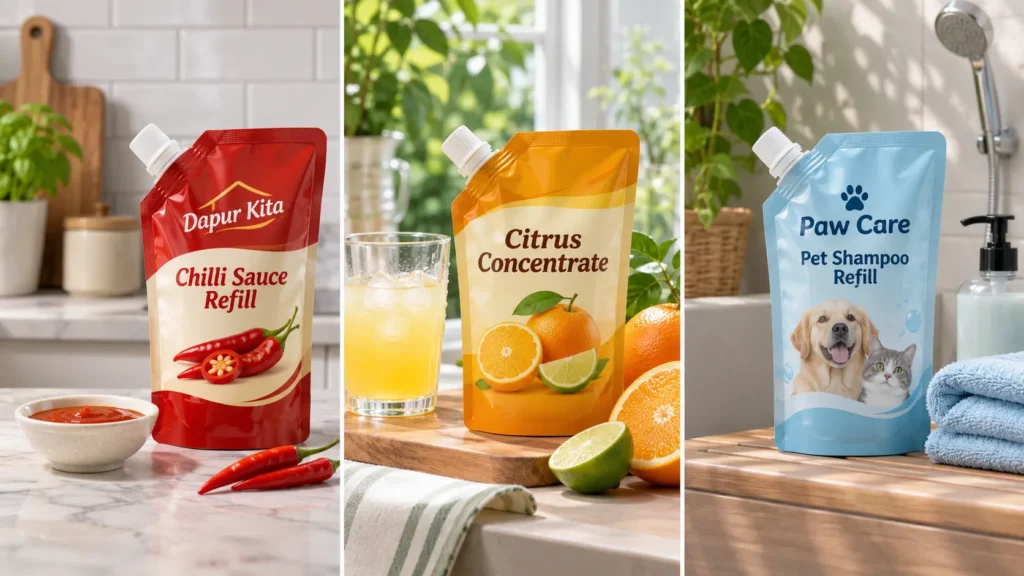
Some sauces, drink concentrates and liquid pet-care products can also use spouted packs, but they bring different filling, contact and labelling requirements. If your project is outside beauty or household care, discuss that product’s requirements specifically rather than borrowing a specification from another industry.
When Is a Spout Pouch the Right Choice?
A spout pouch is most useful when controlled pouring or dispensing matters. It may suit a refill poured into another container, or a product accessed from the pouch more than once. Before choosing it, confirm that the formula, fill volume and intended use justify a spout and cap.
How Will Customers Pour and Use the Refill?
Decide whether the pouch is meant to refill an existing bottle or be used directly. For a bottle refill, compare the spout opening with the bottle opening and check whether customers can hold the pouch comfortably while pouring. The refill amount should also make sense for that bottle’s capacity.
For direct use, the cap, pouring angle and storage after opening become more important. Try both methods with a filled sample if the product may be used in either way. This shows whether the proposed spout is helpful in practice.
When Might Another Pouch Format Work Better?
A spout may add little value to a dry product, a single-use portion or a refill emptied entirely at once. A plain pouch or sachet may be worth discussing for those uses. The better choice depends on how customers open, transfer and store the product—not on which format looks more advanced.
Note: For more on spout pouch formats, materials and printing, see our custom spout pouch packaging guide.
What Should You Check Before Choosing the Pouch?
Check the complete pack, not just the pouch’s printed front. The formula, film structure, spout, cap and seals must work with the filling process and the product’s intended storage conditions.
Product Formula and Packaging Material
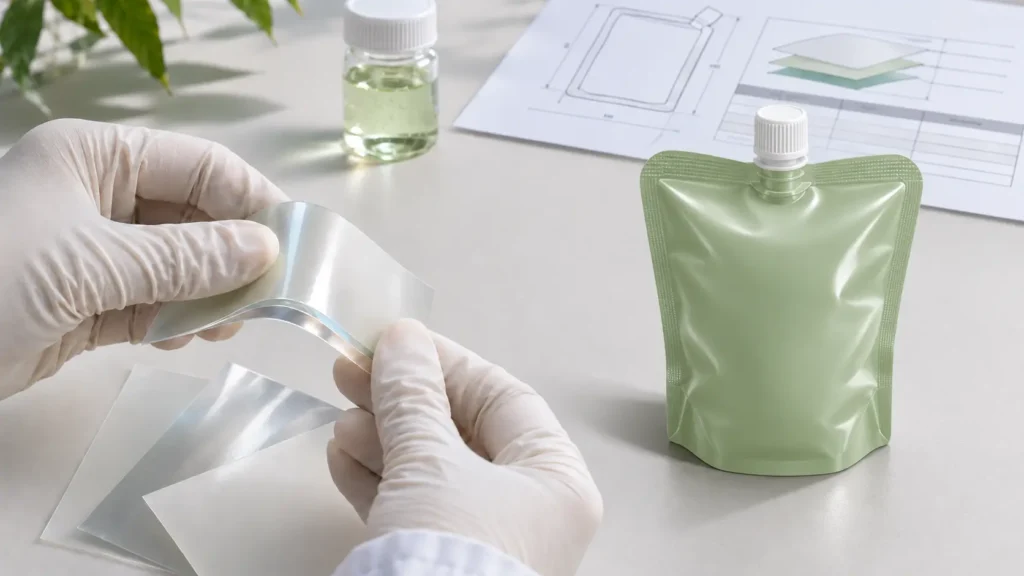
The material that touches the product must suit the actual formula. Water content, oils, fragrance, active ingredients or cleaning chemicals may change what needs to be checked. A film name alone cannot establish compatibility or product shelf life.
Give the supplier and your product or quality team the formula category, expected storage conditions and any known sensitivities. Have them review the proposed full pouch structure and confirm what compatibility checks are required before approving production.
Fill Volume, Pouch Size and Spout Position
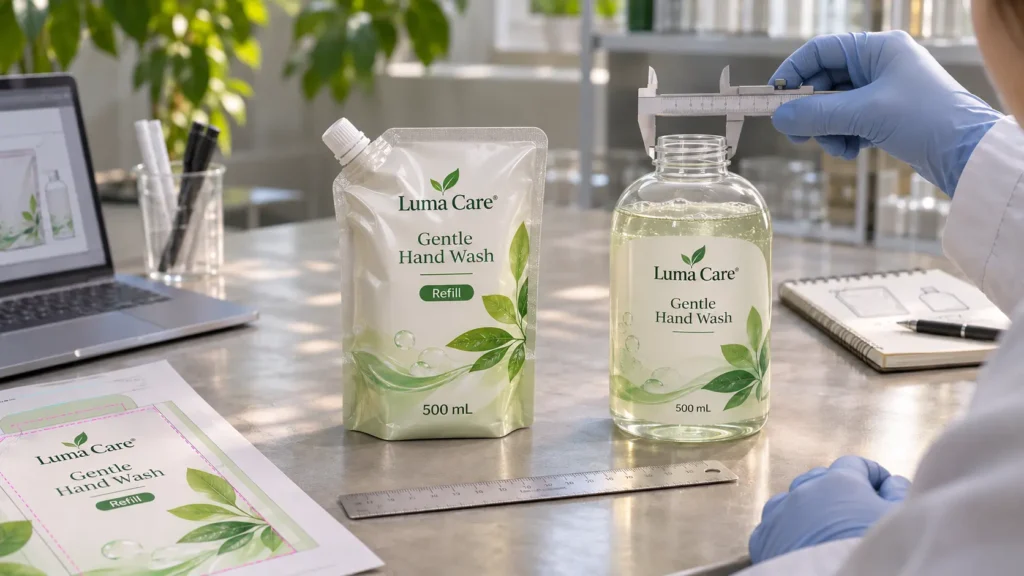
Choose a fill amount before fixing the pouch dimensions. The pouch needs room for the product, its seams and the spout without becoming awkward to hold. If it will refill a specific bottle, confirm that bottle’s capacity and opening size as well.
Spout position affects how the filled pouch pours and how much space remains for the artwork. Tell the supplier whether the pouch will stand on a shelf or lie in a parcel, and ask the filling partner whether the proposed size and spout position work with its equipment.
Cap, Seals and Leak Protection
The cap should close as intended, while the pouch seams and spout joint need to withstand filling, storage and normal handling. A visually neat pouch can still fail if a seal or cap does not work with the actual product.
Ask for a filled sample using the proposed construction. Check pouring into the intended bottle, reclosing the cap, visible leakage after handling and how the pouch behaves in its delivery carton.
How Can Refill Pouches Help Your Business?
A refill pouch gives your business another product to sell after a customer buys the original bottle. Customers can keep using that bottle and return for a refill when it runs out. Offering refills in bundles or different fill amounts can encourage repeat orders and help increase sales.
A refill pouch may cost less to produce than a new bottled pack, which could let you offer a lower selling price while maintaining a suitable margin. Compare quotations for both formats before setting the price. If you discuss sustainability, focus on customers reusing the bottle and check the packaging materials before making broader claims.
How Will the Pouch Be Displayed and Delivered?
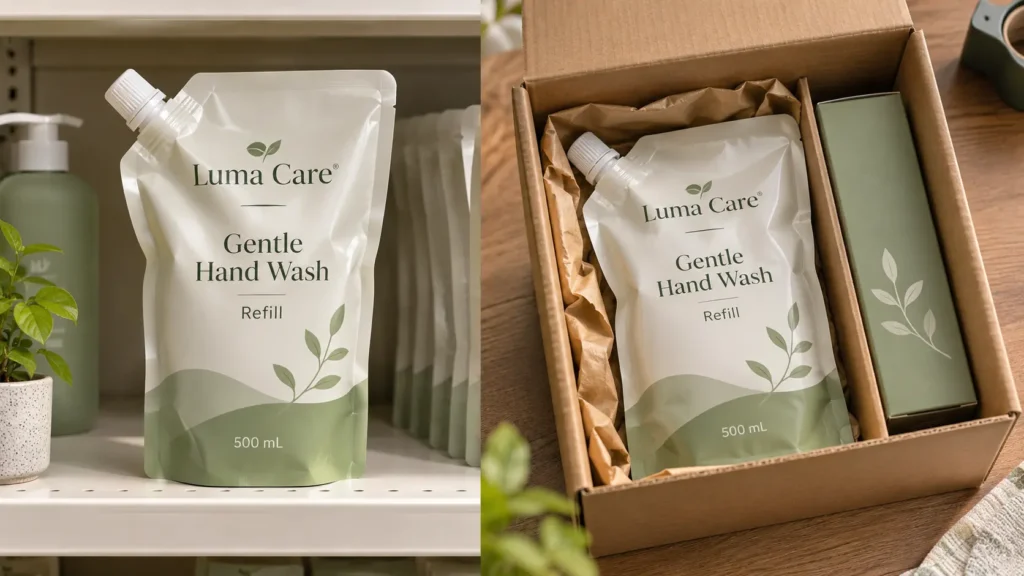
The sales channel changes what the filled pouch needs to do. A retail pack may need to stand upright with its product name visible. A refill sold online may be placed inside a shipping carton with other items. In either case, check whether the cap or spout protrudes and could be pressed during handling.
Look at a filled pouch in its intended position, not only as a flat artwork file. Check front-panel readability, base stability if it will stand, and whether the delivery arrangement prevents rubbing, crushing or leakage. A presentation pouch does not automatically replace an appropriate outer shipping pack.
How Should You Plan the Printing and Product Information?
Keep the brand and product name clear on the front, then place approved product information where it remains readable after filling. Leave room around the spout, seams and any folds so important text is not hidden or distorted.
Plan each product variant as its own artwork version. A shampoo refill and a body-wash refill may share a design system, but their names, directions, claims and other information must match the correct product. Reserve space for batch or date details if these will be added during filling, and confirm how that information will be printed.
Review a proof on the intended material and have the responsible team approve the wording for the product category. For file setup details, see the artwork preparation guide.
What Information Is Needed for a Quotation?
Send a short brief that lets the supplier discuss a suitable pouch and a realistic production schedule:
Product type, formula characteristics and intended use.
Fill amount, target pouch size and the bottle opening it must refill.
Preferred spout position and cap requirements, if known.
Filling method, storage conditions and delivery route.
Quantity for each design, artwork status and required date.
If you have a product and bottle sample, provide both. State whether your own team or a filling partner will fill and cap the pouches. Ask for the proposed specification, sample options and a project-specific quotation before approving artwork for production.
Planning a skincare, personal care or household refill pack? Contact EAN Label with your product details, fill amount, existing bottle, artwork versions and required data. The team can discuss spout pouch packaging and provide a project-specific quotation and fast-turnaround schedule.
Frequently Asked Questions
Contact Us
Want to know the price or need us to recommend the best solution for you? Just fill in the simple form below and we’ll assist you right away.
Enquiry Form
Request a Quote?
Share your requirements and connect with our expert custom packaging manufacturer. Contact EAN Label today!
Connect with us!